Introduction
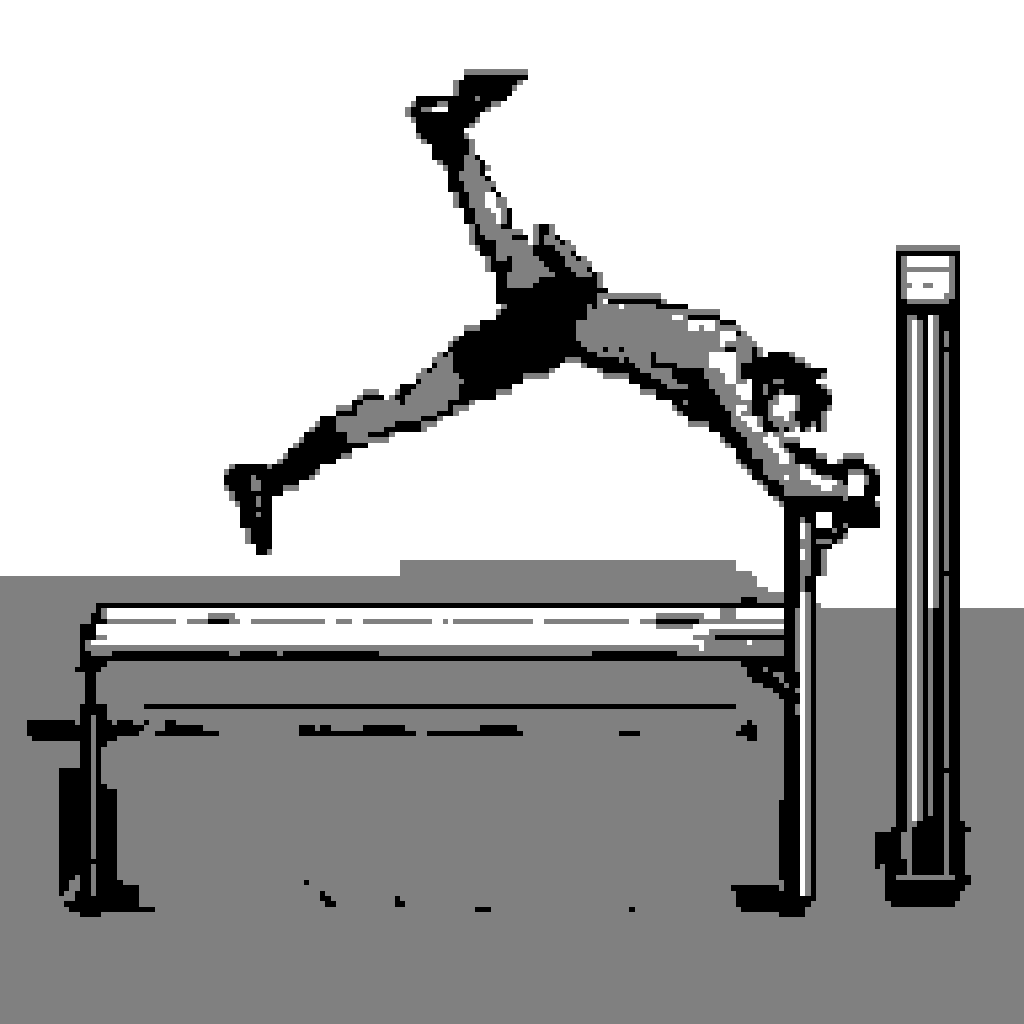
The coaches teach the straddle. You run at the bar, kick up a leg, and roll over it face down. Dick Fosbury, a high-school kid in Medford, Oregon, can’t make his body do it. In his second year, he fails to clear five feet. Five feet is the entry height at many meets.
So what does he do?
He goes back to the scissors, an older and simpler style he can do. He sits up a little straighter over the bar. Then he leans back a little more. Jump by jump, his shoulders go first and his hips follow. By his senior year he goes over the bar head first, on his back, face to the sky.
It looks wrong. In 1964 the local paper ran a photo with the caption “Fosbury Flops Over Bar.” Another paper called him the world’s laziest high jumper. The style also hurt, unless the school had a soft landing pit. Foam pits had only just replaced wood chips and sawdust in many American schools.
Then 1968, Mexico City. Fosbury wins Olympic gold and sets an Olympic record of 2.24 metres. Four years later, in Munich, 28 of the 40 high jumpers use his style. By 1980, 13 of the 16 finalists use it. Today almost every high jumper goes over backwards.
Fosbury never got better at the straddle. He never accepted that the high jump meant the straddle.
Stated problem: “learn this technique.”
Real problem: “get your body over the bar.”
Which one would you have worked on?
The thesis
Most breakthroughs came from refusing the problem as it was stated. And the refusals follow a small number of patterns that you can learn.
The stories come from medicine, war, engineering, farming, finance and sport. Many of the people in them were stuck, short of money, or short of time. Some had to give up their first idea. What they shared was a habit. Before they worked on the problem, they questioned it.
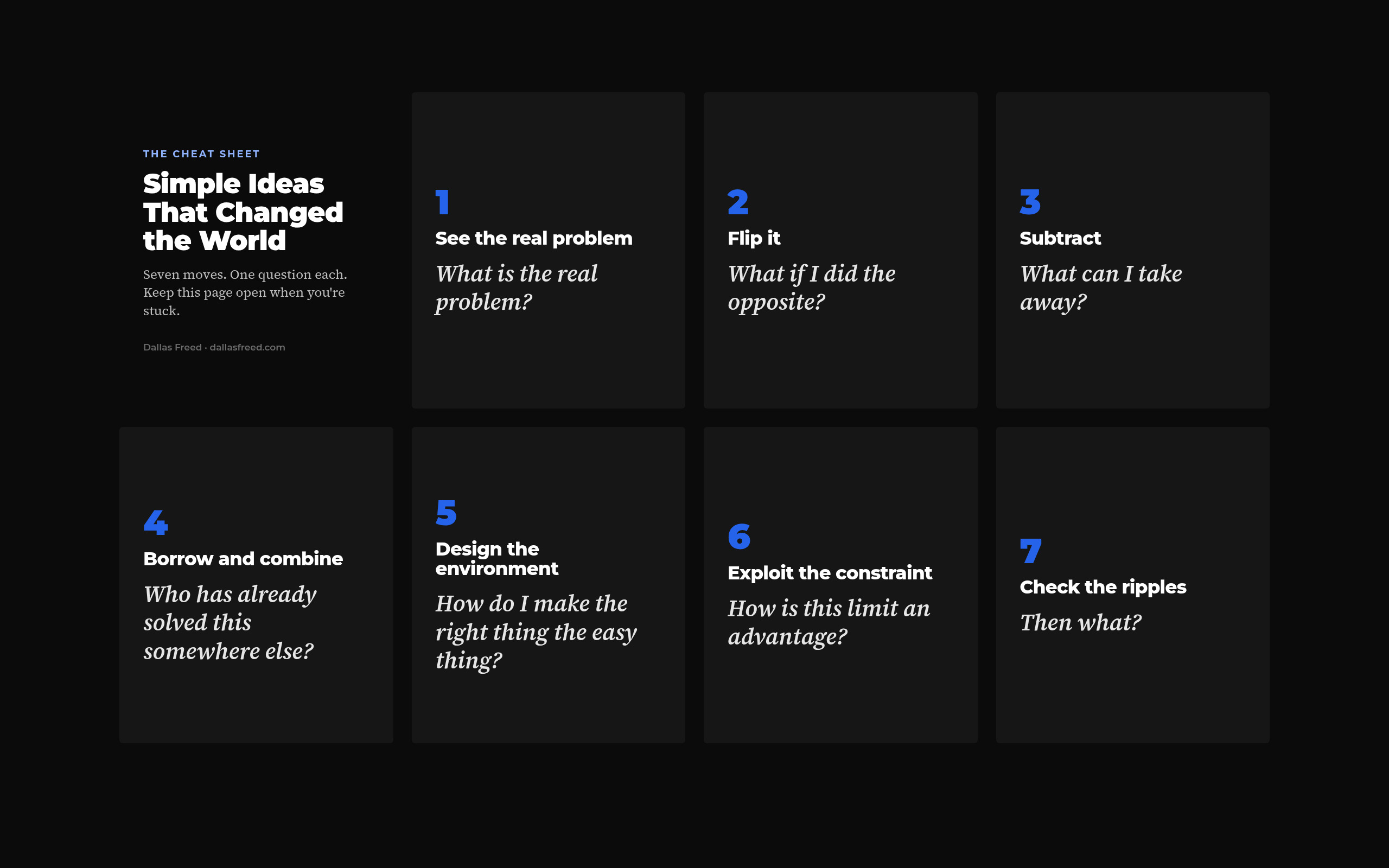
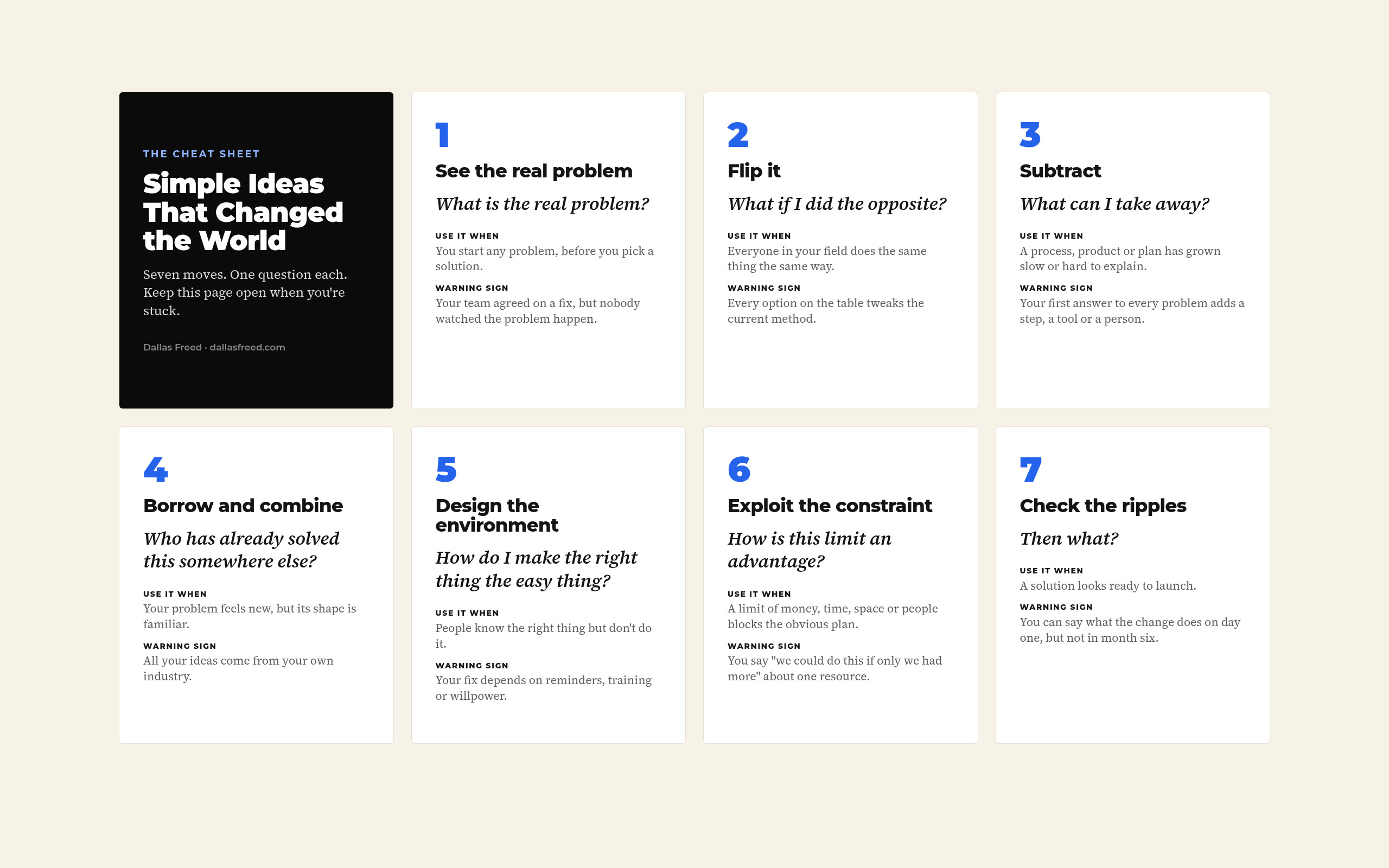
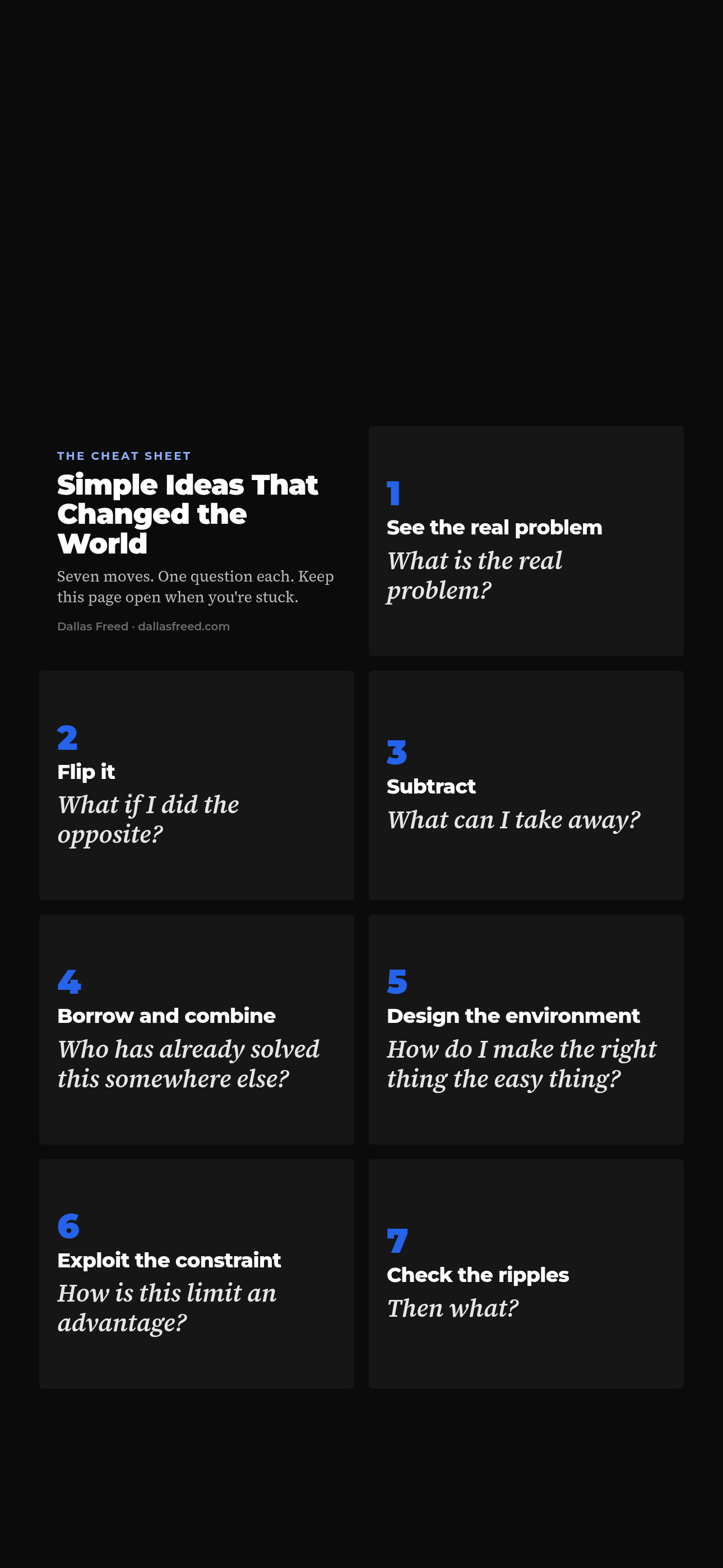
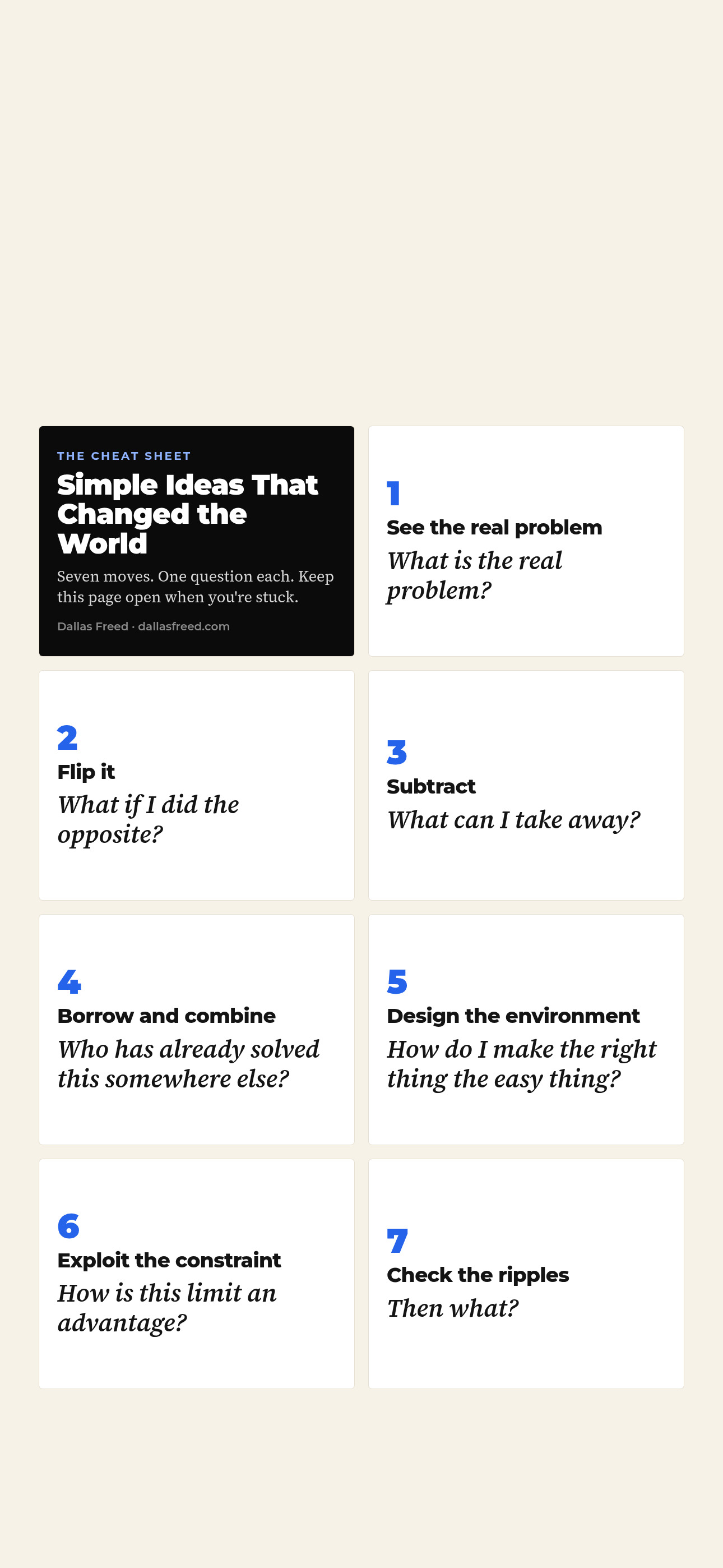
I found seven moves. Each move is a question you can ask about your problem. Each chapter tells one story in depth, then a few short ones. Then it shows you how to use the move.
- See the real problem. What is the real problem?
- Flip it. What if I did the opposite?
- Subtract. What can I take away?
- Borrow and combine. Who has already solved this somewhere else?
- Design the environment. How do I make the right thing the easy thing?
- Exploit the constraint. How is this limit an advantage?
- Check the ripples. Then what?
The moves overlap. A good answer often uses two or three of them. The order matters a little. The first move comes first because you can’t solve a problem well until you know which problem it is. The last move comes last because every solution makes new problems.
The first tool
What would this look like if it were easy?
Tim Ferriss tells how he found it in the introduction to Tribe of Mentors (2017). He felt overwhelmed by a long list of open questions. He sat down with a journal and asked himself this one. The answer gave him the plan for that book.
I love this question. Most of us assume a hard problem needs a hard solution. We pick the path with the most resistance and call it diligence. The question removes that assumption for a moment.
It doesn’t promise easy work. Ferriss still sent thousands of emails to make his book. But it points you at a different route.
Fosbury asked a version of it with his body. The straddle was hard for him. The scissors was easy. He started from the easy thing and changed it, one jump at a time, until it beat the hard thing.
I use a version of this every time I write software. I call it dream code. First I write the code I wish I could write. I define exactly what I want, as if anything were possible. I don’t ask yet whether it is. Then I work backward. What has to exist for the dream to run? I build that, one piece at a time.
Most of the time, the dream turns out to be closer than I thought. When it isn’t, I still know exactly which way to walk.
Dream first. Work backward.
Think About It
Try it now. Pick any problem you have and write it down. Then write your dream version: what solved would look like if anything were possible. Don’t judge it yet. You’ll need it in Chapter 1.
Chapter 1: See the Real Problem
Kill the bomber. Go. → Stuck.
Find the bomber. Go. → Unstuck.
Same war. Same bomber. Different problem.
The question for this chapter: what is the real problem?
The problem you get is a description. Someone wrote it down. They chose the words, and the words carry their guess about the answer. So before you solve anything, find the guess. Then find out what they need.
The death ray
Britain, the early 1930s. Newspapers carried stories of a “death ray,” a beam of radio energy that could kill a pilot or stop an engine at a distance. In January 1935, Harry Wimperis of the Air Ministry took the idea seriously enough to ask an expert. He wrote to Robert Watson-Watt, who ran the Radio Research Station at Slough.
Could radio waves damage an aircraft or its crew?
Watson-Watt handed the sum to a junior scientist, Arnold Wilkins, as a test case. How much radio power would you need to heat eight pints of water from 98 to 105 degrees Fahrenheit? The water stood in for a pilot’s blood. The pilot was 5 kilometres away and 1 kilometre up.
Wilkins did the arithmetic. The power was impossibly large, even before you allowed for the metal skin of the aircraft.
No death ray. That answered the question the Air Ministry asked.
But Wilkins didn’t stop there. He remembered a report from Post Office engineers. Passing aircraft disturbed their radio reception. The aircraft reflected some of the signal. Watson-Watt asked him what that meant for the Air Ministry’s problem. Wilkins did a second sum. A transmitter of practical size couldn’t hurt a bomber. But the bomber would reflect enough energy to be detected many miles away.
See the shift?
The Air Ministry asked, “How do we destroy a bomber with radio?” The real problem was, “How do we stop the bombers?” Britain already had a tool for that: the fighter. The fighter failed for one reason. It didn’t know where the bombers were.
On 12 February 1935, Watson-Watt sent the Air Ministry a memo with a plain title, “Detection and Location of Aircraft by Radio Methods.” The Ministry wanted proof before it spent money.
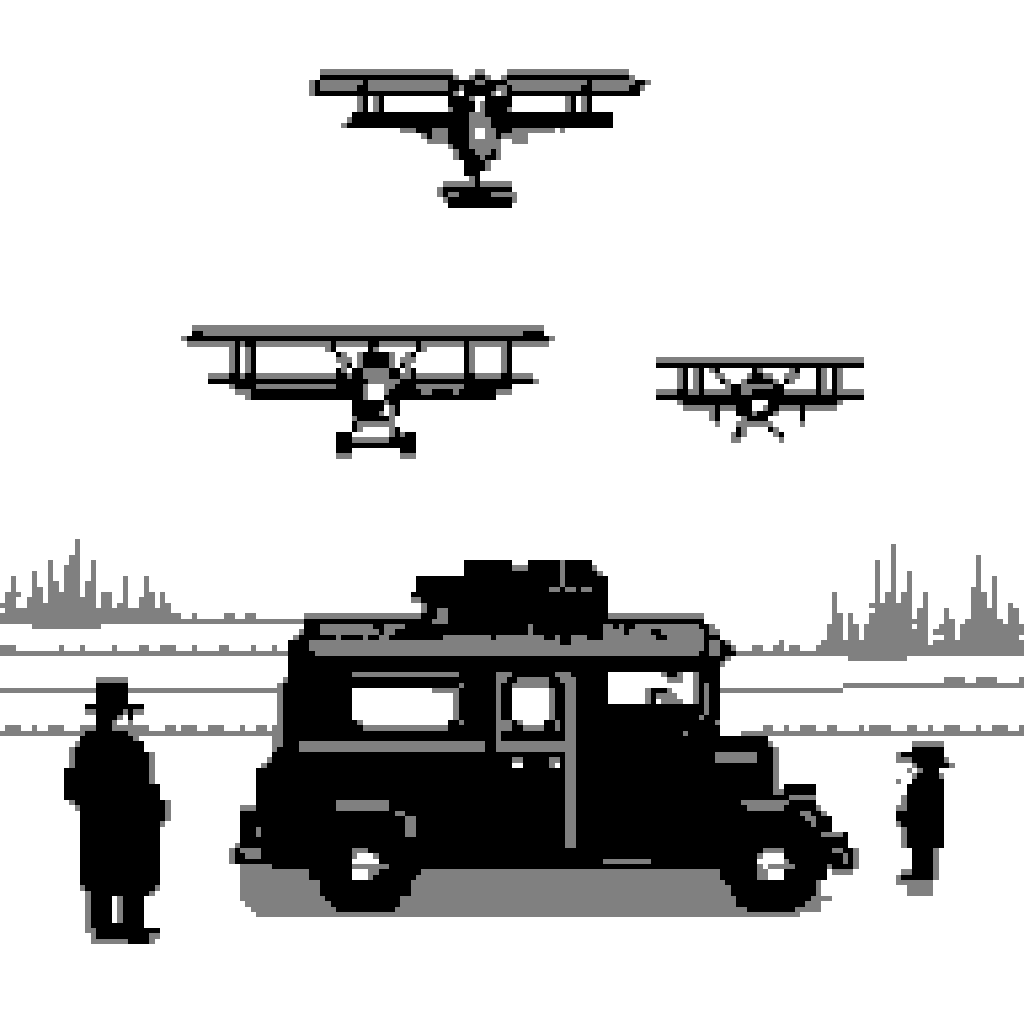
So, 26 February. Watson-Watt, Wilkins and A.P. Rowe from the Ministry drive a van into a field near Weedon, in Northamptonshire. Nearby, the BBC’s shortwave station at Daventry is on the air. A Heyford bomber flies back and forth through its beam. In the back of the van, Wilkins watches a cathode-ray screen. Each time the bomber passes, a spot on the screen rises and falls.
Crude equipment. It worked. The echo showed at about eight miles.
The Ministry funded the work. The team moved to the coast, first to Orfordness and then to Bawdsey Manor. By the start of the war in 1939, a line of tall steel masts stood along the south and east coasts of England. This was Chain Home. Its stations could see raids forming far out over the Channel.
Detection alone didn’t win anything. The radar plots went to a filter room at Bentley Priory. Staff there merged the reports, removed the duplicates and passed one picture to the controllers. The controllers sent fighters to meet each raid. Observers on the ground tracked the bombers once they crossed the coast. The system later took its name from the head of Fighter Command, Hugh Dowding.
In the summer of 1940, the system did what the death ray couldn’t. The RAF had fewer fighters than the Luftwaffe had aircraft. It couldn’t keep patrols in the air all day. It didn’t have to. The fighters stayed on the ground until a raid came. Then they went straight to it. Max Aitken, who commanded a squadron in the battle, said later that without radar “we would have been doing standing patrols.” With so few aircraft and pilots, that would have failed.
Two details make this story useful to you.
First, the Air Ministry asked a specific question that held a guess about the answer. The guess was “a weapon.”
Second, Wilkins answered that question honestly before he moved on. He didn’t refuse the problem out of pride. He did the sum, saw the dead end, and then asked what the Ministry needed.
Historians still argue about credit. Watson-Watt got the knighthood and most of the fame. Wilkins did both calculations and ran the equipment in the field. The move itself is clear.
Stated problem: “destroy a bomber with radio.”
Real problem: “find the bombers so the fighters can meet them.”
The ulcer
Say you’re a doctor for most of the twentieth century. A patient has a stomach ulcer. You treat it as a disease of stress and acid: antacids, bland diets, sedatives, sometimes surgery. The ulcers often come back. Everyone knows that nothing can live in stomach acid, so the cause can’t be an infection.
In 1979, Robin Warren, a pathologist in Perth, Australia, saw spiral bacteria in stomach biopsies. He kept seeing them, often near inflamed tissue. In 1981 a young doctor, Barry Marshall, joined him. Together they grew the bacteria and found them in almost every patient with a duodenal ulcer.
Other doctors doubted that the bacteria caused the ulcers. Maybe they only lived there. Marshall couldn’t infect lab animals, and he couldn’t ethically infect a patient.
So in 1984 he drank a culture of the bacteria.
After a few days he was sick, with nausea and vomiting. A biopsy showed gastritis full of the bacteria. Antibiotics cleared it.
The bacterium is now called Helicobacter pylori. In 1994 a US National Institutes of Health panel recommended antibiotics for ulcer patients with the infection. Warren and Marshall shared the Nobel Prize in 2005.
Stated problem: “control the acid.”
Real problem: an infection that a course of antibiotics could cure.
The two clinics
Vienna General Hospital, the 1840s. Two maternity clinics. Doctors and medical students staff the First Clinic. Midwives staff the Second.
Many women in the First Clinic die of childbed fever, about one in ten in some years. In the Second Clinic the rate is about one in twenty-five. Women know this. Some beg not to go to the First Clinic.
Ignaz Semmelweis, a young assistant in the First Clinic, treated the gap as a clue. Same building. Same kind of patient. So why the difference? He checked the usual explanations one by one, such as crowding, posture during birth and fear. None of them fit.
In 1847 his colleague Jakob Kolletschka cut his finger during an autopsy and died. The autopsy of Kolletschka looked like the autopsies of the women. Now Semmelweis saw the difference. The doctors and students came to the wards from the dissection room. The midwives didn’t.
He ordered everyone to wash their hands in chlorinated lime before they examined a patient. Deaths in the First Clinic fell to the level of the Second. In 1848 the rate was close to one in a hundred.
Happy ending? No. Many doctors rejected his idea. It blamed them, and he explained it badly and published late. The hospital let his post lapse. He died in an asylum in 1865.
Stated problem: “why are these women sick?”
Real problem: “what do we carry to them?”
The ring
Late 1966. William Foege is a medical missionary in eastern Nigeria. Smallpox breaks out in his area.
The standard method is mass vaccination. Vaccinate most of the population, and the virus has nowhere to go. Foege doesn’t have enough vaccine for that, and more isn’t coming.
What would you do?
He changed the problem to a smaller one: stop this virus from reaching new people. He asked missionaries across the district to report new cases by radio. His teams found each case, isolated it and vaccinated everyone around it. Then they vaccinated the contacts of those people. Each outbreak got a ring of immune people that the virus couldn’t cross.
The outbreak stopped, although most people in the area never got the vaccine. The method became known as surveillance and containment, or ring vaccination. The global smallpox campaign adopted it. The last natural case was in Somalia in 1977. The World Health Assembly declared smallpox eradicated in 1980.
Stated problem: “vaccinate everyone.”
Real problem: “break every chain of infection.”
The second problem needed far less vaccine.
Two parables about waiting
Donald Gause and Gerald Weinberg open their book Are Your Lights On? with a case like this. You run an office tower. The tenants complain that the elevators are slow. Faster elevators would cost a fortune. Then someone suggests mirrors beside the elevators. People look at themselves while they wait, and the complaints stop.
Stated problem: slow elevators.
Real problem: unpleasant waiting.
The advertising executive Rory Sutherland tells a similar parable about the Eurostar train. Britain spent about six billion pounds on new track to cut some 40 minutes from the London to Paris trip. In a 2009 TED talk, Sutherland suggested another use for the money. Hire the world’s top supermodels to walk the train and pour free Château Pétrus. Passengers, he said, would ask for the trains to slow down.
Stated problem: “make the train faster.”
Real problem: make the trip pleasant.
Neither parable is evidence. Both make the same point. “The elevator is too slow” and “the train is too slow” describe a feeling. The real problem might be the time. Or it might be the boredom.
The diamond
Shreddies is a square, whole-grain cereal sold in Canada. By 2007 people liked it, but the brand seemed old and dull. The owner, Post, asked its agency, Ogilvy in Toronto, for help.
The agency left the cereal alone. It turned the square 45 degrees and called it “Diamond Shreddies.”
That’s it.
The boxes showed the new shape. The ads ran taste tests between “old” squares and “new” diamonds. There was even a combo pack with both. The whole campaign was a joke, and it told buyers that the cereal they already liked was worth another look.
The agency reported that baseline sales rose 18 percent in the first month. That figure comes from award entries, not an audit.
Stated problem: “improve the product.”
Real problem: attention.
The dazzle ships
It’s 1917. German U-boats sink Allied ships faster than the yards can build them. You command a cargo ship. How do you hide it?
You can’t. The sea has no background to blend into. The light changes by the hour.
Norman Wilkinson, a British marine artist and naval reserve officer, asked a different question. A U-boat commander needs more than a sight of the ship. He must judge its speed, its course and its range, so he can aim the torpedo ahead of it. Wilkinson proposed paint that confused that judgment. Bold stripes, clashing angles, false bows. By 1918 the British had painted thousands of merchant ships and hundreds of warships this way.
Did it work? Nobody knows for sure. A 1918 Admiralty review found no clear effect on the rate of attacks. Convoys started at about the same time, so the data is tangled. A later study suggests dazzle may have confused a viewer’s sense of speed a little.
The caveat stands. So does the question.
Stated problem: “make the ship invisible.”
Real problem: “make the aim go wrong.”
The lake on the hill
In 1879 a congress in Paris chose a plan for a canal across Panama. It would be a sea-level cut, like Ferdinand de Lesseps’s canal at Suez. One French engineer, Adolphe Godin de Lépinay, stood up and disagreed. Dam the rivers, he said. Make a lake high above the sea. Use locks to lift ships up to it and down again. The congress voted for the sea-level cut.
The French dug from 1881 to 1889. Landslides filled the cuts. Yellow fever and malaria killed workers by the thousands, about 22,000 by one common estimate. The company went bankrupt.
The Americans took over in 1904. In 1906 their chief engineer, John Stevens, persuaded Congress and President Roosevelt to build a lock canal. A dam on the Chagres River made Gatun Lake, about 85 feet above sea level. Locks lift each ship up to the lake and lower it on the far side. The canal opened in 1914.
Stated problem: “cut through the mountains.”
Real problem: “get ships from one ocean to the other.”
Godin de Lépinay saw it 27 years early.
The crescent
Summer 1588. The Spanish Armada, about 130 ships, anchored off Calais in a tight crescent. It waited to carry an army across the Channel. The English ships were faster, but they could not break the formation.
The stated problem was “sink the Spanish ships.” The English could not do it. So look one step back. The Armada was dangerous as a crescent, not as 130 ships. Break the crescent, and the ships were only ships.
Fire was the biggest fear on a wooden ship. On the night of 7 August, the English packed eight of their own ships with pitch and tar. They set them on fire and let the wind and tide carry them in.
The Spanish captains cut their anchor cables and scattered in the dark. Few or no Spanish ships burned. That did not matter. The formation was gone.
The next day, the English attacked the scattered fleet off Gravelines. The Armada could not form up again. It sailed home around Scotland and Ireland and lost many ships to storms.
Eight fireships. Few Spanish ships burned, or none. The real problem was solved anyway.
Stated problem: “sink the Spanish ships.”
Real problem: “break the formation.”
Salt, sugar, water
Cholera and other diarrheal diseases killed millions of children each year. The standard treatment was salt water into a vein. That needs sterile kit, trained staff and a clinic. The children who died rarely had any of these.
Why not give the fluid by mouth? The gut seemed to be the thing that was failing. Water went straight through.
In 1960 the biochemist Robert Crane described how the gut absorbs glucose and sodium together. Glucose carries sodium across the gut wall, and water follows. This pump keeps working during cholera. In the 1960s, teams in Dhaka and Calcutta tested drinks of clean water, salt and sugar. They worked.
In 1971, during the war that created Bangladesh, cholera hit refugee camps at Bangaon in India. Dilip Mahalanabis’s team ran out of intravenous fluid. They handed out packets of salt and sugar and let families mix the drink and give it by spoon. Reports put deaths in his camp near 3 percent, against 20 to 30 percent elsewhere.
You’ll often read that The Lancet called this the most important medical advance of the century. The 1978 editorial said something close, but about the sodium and glucose discovery.
Stated problem: “the gut can’t absorb water.”
Real problem: “give the gut what it can absorb.”
Count the links
Late 1990s. You type a word into a search engine. The engines rank pages mostly by what the pages say about themselves. So page owners say a lot. They hide lists of popular words in white text on a white background. Spam rises to the top.
Every engine tried to read pages better. Larry Page and Sergey Brin, two PhD students at Stanford, stopped trusting what a page says about itself. They looked at what other pages say about it. A link from one page to another is a kind of vote. A vote from a page that gets many votes counts for more.
Page took the idea from academic papers. A paper that many papers cite is probably important. Their algorithm, PageRank, treated the shape of the web as the signal. They described it in 1998, the year they founded Google.
They weren’t alone. Robin Li built a similar link-based method in 1996 and patented it, and Jon Kleinberg published another in 1998. Good ideas often arrive in several places at once.
Stated problem: “read the page better.”
Real problem: “find out what other people trust.”
Lend to the people who own nothing
In 1976 Muhammad Yunus taught economics at Chittagong University in Bangladesh. Outside the campus, in the village of Jobra, he met women who made bamboo stools. They borrowed from moneylenders to buy the bamboo. They sold the stools back to the same lenders, at the lender’s price. They kept almost nothing.
Yunus made a list of the people in the village who were trapped this way. There were 42 of them. Together they needed 856 taka, about 27 US dollars. He lent it from his own pocket.
The banks said these people had no collateral, so they couldn’t borrow. Yunus saw a different problem. Collateral was beside the point. These people needed a small loan on terms they could survive. Grameen later made small groups of borrowers support each other, and it lent mostly to women. It became a bank in 1983. Yunus and Grameen shared the Nobel Peace Prize in 2006.
Microcredit has critics. Later studies found smaller gains in income than its early fans claimed.
Stated problem: “these people are too poor to lend to.”
Real problem: “the loans don’t fit these people.”
The key you never send
You want to send a secret message to a stranger. You both need the same secret key to lock and unlock it. But how do you send the key? Anyone can read the channel. To share a secret, it seems you must already share a secret.
In 1976 Whitfield Diffie and Martin Hellman published a way out. Two people each pick a private number. Each one does some math with it and sends the result in the open. Each then combines the other’s result with their own private number. Both arrive at the same key. A listener sees everything that was sent, but can’t work out the key in any practical time.
This is key exchange. It gets two people a shared key without ever sending the key. Diffie and Hellman also described the idea of a public lock with a private key. Ron Rivest, Adi Shamir and Leonard Adleman made that work in 1977, with RSA. And there’s a twist. At GCHQ, James Ellis, Clifford Cocks and Malcolm Williamson found both ideas a few years earlier. It stayed secret until 1997.
Stated problem: “send the key safely.”
Real problem: “agree on a key without sending it.”
Through the floor
Fortaleza, Brazil, 2005. A branch of the Central Bank holds a vault full of used banknotes. It has guards, cameras, alarms and thick concrete. You want the money. Where do you start?
Most robbers would study the doors, the walls and the guards. This gang studied the ground. They rented a house near the bank and set up a landscaping company. A landscaping company moves a lot of dirt, so neighbours saw nothing strange.
For about three months they dug. The tunnel ran roughly 80 metres, with wood supports, lights and air. It came up under the vault. Over the weekend of 6 August, they cut through the floor. They carried out about 3.5 tonnes of 50-real notes, some 164 million reais. That was close to 70 million US dollars at the time. Staff found the hole on Monday morning.
Police later caught many of the gang, but they recovered only part of the money.
Stated problem: “how do people get into a vault?”
Real problem: “where isn’t anyone watching?”
Think About It
The question: What is the real problem?
Treat any problem you get as a draft. Somebody wrote it, and it holds their guess about the answer. Find the guess. Then ask what the person needs once the problem is gone.
Three short questions help.
- What will you do with the answer? The Air Ministry wanted dead bombers, not a ray.
- What is different where the problem doesn’t happen? Semmelweis compared two clinics.
- What would solved look like, if the method didn’t matter? Foege needed no new cases, not full coverage.
One caveat worth naming: sometimes the stated problem is the real one. Wilkins did the death-ray sum first. Do the honest work on the question you got before you swap it for another.
A worked example. Let’s say you run a small online shop. You want a chatbot on your website. Customers send too many emails, and your staff can’t keep up. A chatbot costs money and setup time.
First, ask what you’ll do with the chatbot. “Answer questions faster.”
Then look at where the problem doesn’t happen. Some weeks the inbox is quiet. Those are weeks with few orders. So read the emails from a busy week and sort them. In this example, most of them ask one question: “Where is my order?”
Now the real problem is visible. The shipping email has no tracking link. Customers can’t see where their parcel is, so they ask. The fix is one line in an email template. The chatbot might still be useful later. But it would have answered the same question thousands of times instead of removing it.
Now use the tool from the Introduction. What would this look like if it were easy? A customer who never needs to ask. That’s the tracking link.
An exercise. Take one request that came to you this week. It can be from your boss, a client or someone at home.
- Write the request exactly as you got it.
- Underline the part that is a method, not a result. “Build a chatbot.” “Make the elevator faster.” “Vaccinate everyone.”
- Ask the person, or yourself, “What will this let you do?” Write the answer.
- Ask the question again about that answer. Stop when the answer is something the person needs for its own sake.
- Write the problem again, using only that last answer.
Same problem as before? Good. Now you can solve it with confidence. Different problem? You just did what Wilkins did in 1935.
Answer the question. Then question it.
Chapter 2: Flip It
Remember the ring from chapter 1? A team ended smallpox by refusing to vaccinate everyone. They found each case and closed a ring around it.
That ring needed a vaccine. So where did the vaccine come from?
It took two people, eighty years apart. Each one did the opposite of the obvious thing.
Give them the disease
Picture 1716. Lady Mary Wortley Montagu sets out for Constantinople. Her husband is the new British ambassador to the Ottoman court.
She already knows smallpox well. It killed her brother. It marked her own face and took her eyelashes.
In Constantinople she sees something no English doctor does. Every September, people gather in parties of fifteen or sixteen. An old woman comes with a nutshell of matter from a mild smallpox sore. She opens a vein with a large needle and puts a little of the matter in. Each person gets a light case, recovers, and never catches smallpox again.
In April 1717 Montagu writes home to a friend. “The small-pox, so fatal, and so general amongst us, is here entirely harmless,” she writes, “by the invention of ingrafting.”
She does not stop at the letter. Before the family leaves in 1718, she has the embassy surgeon, Charles Maitland, watch the procedure on her son. The boy is about five. He comes through it well.
Every doctor in England had one rule for smallpox: keep away from it.
Montagu reversed the rule. She gave the disease on purpose, in a small dose, at a time she chose. In English, the name became inoculation, or variolation.
Smallpox came back to London in 1721. Montagu asked Maitland to inoculate her small daughter, and she had three physicians from the Royal College watch. The case caught the attention of Caroline, Princess of Wales.
Caroline wanted proof before she risked her own children. Wouldn’t you?
So the Crown made an offer to condemned prisoners at Newgate. Six of them took inoculation in August 1721 in exchange for their freedom. All six lived.
A second test followed on orphan children. Then two royal princesses received the procedure.
Safer, though, is a different word from safe. A 1729 summary for the Royal Society counted 17 deaths among 897 people inoculated, about one in fifty. Among 18,229 people who caught smallpox the natural way, 3,008 died, about 16.5 percent.
The worse problem was contagion. An inoculated person had real smallpox for a few weeks and could spread it to others.
So by the late 1700s, the flip worked, and it carried its own danger. Someone needed to flip it again.
Give them a different disease
Edward Jenner was a country doctor in Berkeley, Gloucestershire. At eight, he had received variolation himself. He knew the cost of the cure from the inside.
Farm people in his county shared an old belief. A dairymaid who caught cowpox from a cow’s udder did not catch smallpox later. Cowpox gave a few sores on the hands and a mild fever, and then it passed.
Jenner was not the first to act on the belief. In 1774, a Dorset farmer named Benjamin Jesty scratched cowpox into his wife and two sons during an outbreak. Neighbours jeered at him in the market. His sons later stayed well when smallpox came near them.
Jenner’s part was to test the belief and write it down.
Now picture 14 May 1796. A dairymaid named Sarah Nelmes comes to him with fresh cowpox sores on her hand. Jenner takes matter from a sore. He scratches it into the arm of James Phipps, an eight-year-old boy. Phipps gets a mild fever and a sore, and then recovers.
On 1 July, Jenner takes the step that a modern ethics board would stop. He inoculates Phipps with real smallpox matter.
Nothing happens.
The boy does not even get the light case that variolation always gave. Cowpox did not return to the farms until 1798. That spring, Jenner repeated the test on more people.
The Royal Society declined his first report. In 1798, Jenner paid to publish a slim book of about seventy-five pages. He called the cowpox variolae vaccinae, from vacca, the Latin word for cow. That word gave us “vaccine”.
Cartoonists drew vaccinated people sprouting horns. The method spread across Europe and to the Americas within a few years anyway.
Put the two moves side by side:
- Montagu: do not avoid the disease. Give it.
- Jenner: do not give the disease. Give its harmless cousin.
Each one took the accepted answer and turned it over. Turn it over. That is the whole move.
One open question remains. The virus in modern smallpox vaccine is vaccinia, and its closest known relative is horsepox, not cowpox. The team in chapter 1 carried that vaccine from village to village to close their rings. The line runs from a nutshell in Constantinople to the last natural case of smallpox in 1977.
The usual move: keep people away from smallpox.
The flip: give a mild dose on purpose, then give its harmless cousin.
Set the fire
August 1910. Wildfires join across northern Idaho and western Montana. In two days, the “Big Burn” takes about three million acres. At least 85 people die, most of them firefighters.
The young U.S. Forest Service drew one lesson: put out every fire. In 1935 it made the rule exact. Every fire was to be under control by 10 a.m. on the day after someone reported it. Smokey Bear carried the same message to children for decades.
The rule worked for a while. Then the brush, the dead wood and the young trees built up, year after year. Many western forests had evolved with frequent small fires that cleared this fuel. Without them, a fire that once crept along the ground climbed into the treetops.
Indigenous peoples in North America and Australia had set small fires on purpose for thousands of years. Settlers and officials had stopped them.
From the 1970s, the Forest Service began to flip its own rule. Crews now set prescribed fires in cool, damp weather. They burn the fuel before a hot summer does. Some agencies also let certain lightning fires burn in remote areas when the weather allows.
The work is slow, and a planned fire can escape. The trade still favours the small fire.
The usual move: put out every fire.
The flip: set small fires on purpose to burn the fuel.
Blow cold air into hot iron
Back in the 1850s, steel was expensive. Cast iron was cheap and brittle. Wrought iron was tough but soft. To get steel, makers cooked carbon into wrought iron for days, in small batches, with a big fuel bill.
More heat, more days, more fuel. Everyone did it that way.
Henry Bessemer tried the opposite. He blew plain cold air through a vessel of molten pig iron. You would expect the air to chill the metal solid.
Instead, the oxygen burned the carbon and silicon in the iron. That burning made heat. The metal got hotter.
In August 1856 he presented his method to the British Association. His paper’s title announced the flip: steel “without fuel”.
The first licensees failed. Bessemer’s iron happened to be low in phosphorus, and theirs was not. Bessemer and others fixed the chemistry in the following years. A batch of steel then took about twenty minutes. The price of steel fell from £50 or £60 a ton toward £6 or £7.
The usual move: cook steel for days in small batches.
The flip: blow cold air through the molten iron.
Set your fears, not your goals
In 2004, Tim Ferriss was running a small supplement company. By his own account, he worked fourteen-hour days, seven days a week. He used stimulants to start the day and depressants to sleep. He wanted to take a break and could not face the risk.
Sound familiar?
The usual advice is to set goals. Ferriss flipped it and set his fears. He tells the story in his 2017 TED talk, “Why you should define your fears instead of your goals”. The exercise has three pages.
Page one carries the heading “What if I…?” with the feared step written in. Under it are three columns:
- Define: list ten to twenty of the worst things that could happen.
- Prevent: write what you could do to stop each one.
- Repair: write how you would recover if it happened anyway.
Page two asks what an attempt, or even a partial success, could give you. Page three asks what inaction will cost you in six months, one year and three years.
Ferriss did the pages and took a month away. None of the disasters came. The month became a year and a half of travel, and the trip became his first book. He credits the method to the Stoics, and to Seneca’s line that we suffer more in imagination than in reality.
The usual move: set your goals.
The flip: define your fears, and how to prevent and repair each one.
Build the plane you have to fly
Picture 1900. Most flying-machine builders want a stable aircraft. Gusts hit it, and it rights itself. The pilot mostly sits and rides.
Samuel Langley had $50,000 from the U.S. War Department to build that kind of machine. His Aerodrome had almost no way for the pilot to steer it. In October and December 1903, it fell into the Potomac twice.
Wilbur and Orville Wright built bicycles. A bicycle falls over if you stop riding it. Nobody calls that a flaw. The rider balances with small, constant corrections.
So the brothers put control first. They twisted the wingtips, a method called wing warping, so the pilot could roll the plane on purpose. They added a front elevator for pitch.
Their 1903 Flyer was unstable in pitch and roll. Engineers who studied it later found that only a skilled pilot could hold it steady. The brothers did not plan that instability. They accepted it as the price of control.
On 17 December 1903, nine days after Langley’s second crash, the Flyer flew at Kitty Hawk.
The usual move: build a plane that rights itself.
The flip: build a plane the pilot controls, and accept the instability.
Plant it again right away
Let’s say you breed wheat. One crop a year means one generation a year. A new variety takes ten years or more.
In 1945, Norman Borlaug was breeding wheat in Mexico against stem rust. He had no time for ten years.
Mexico gave him two seasons. The central highlands near Mexico City grow wheat in summer. The Yaqui Valley in Sonora, near sea level, grows it in winter. Borlaug harvested in one place and planted the seed in the other at once.
His colleagues objected. Seed needs a rest after harvest, they said. Two climates will confuse the selection.
The seed did not need the rest. Borlaug got two generations a year and cut breeding time in half. The shuttle also gave a bonus nobody planned for. Wheat chosen in two places, at two day lengths, grew well in many countries.
Later he crossed in Japanese dwarf genes, so the stalks held heavy heads of grain without falling over. India and Pakistan planted his wheat from the mid-1960s, and harvests grew fast.
One caveat worth naming: you will read that Borlaug made India self-sufficient in five years and saved a billion lives. Both claims are disputed. The doubling of his breeding speed is not.
The usual move: let the seed rest and grow one generation a year.
The flip: plant it again at once, in the other season.
Let the building slide
How do you keep a building up in an earthquake? The old answer: make it stronger. Thicker walls, more steel. Hold on to the ground and fight it.
But a stiff building takes every jolt the ground gives it.
In 1969, engineers in Skopje, in today’s North Macedonia, flipped the question. Six years after an earthquake destroyed much of the city, they put the Pestalozzi primary school on blocks of natural rubber. The ground could move under the school, and the school moved much less.
The rubber blocks were crude. The building rocked up and down too. Then in 1974, Bill Robinson in New Zealand added a core of lead to a layered rubber bearing. The lead soaks up energy as it bends. The William Clayton Building in Wellington stood on his bearings by the early 1980s.
The 1994 Northridge earthquake gave a real test. The base-isolated USC University Hospital came through with no structural damage. Its bearings cut the shaking that reached the building by about two thirds. After Northridge and Kobe, the use of base isolation rose fast, above all in Japan.
The usual move: make the building stronger and grip the ground.
The flip: put it on bearings and let the ground move under it.
Send the dangerous current
Back in the 1880s, Thomas Edison sold direct current. It ran at low voltage, which was fairly safe. It also lost power fast in the wires. You needed a power station within a mile or so of every customer.
George Westinghouse bet on the opposite. Alternating current, using Nikola Tesla’s motor patents among others, could step up to high voltage. High voltage travels far on thin wire. A transformer then steps it down at the customer’s door.
High voltage sounds dangerous because it is dangerous. Edison’s side used that fear. In 1888, an engineer named Harold Brown killed dogs, calves and a horse with AC to show the danger. Edison lent Brown his laboratory and his staff, watched some of the killings, and pushed for AC in the new electric chair.
The fear did not win. AC lit the 1893 Chicago World’s Fair. In 1896, AC from Niagara Falls reached Buffalo, about twenty miles away. Today grids run on AC, with DC back for some very long lines.
The usual move: send safe, low-voltage current to nearby customers.
The flip: send dangerous high voltage far, then step it down at the door.
Run osmosis backwards
Put a membrane between fresh water and salt water. Water moves toward the salty side. That is osmosis. It thins the salt, and you cannot drink the result.
For desalination, the usual move was to boil seawater and catch the steam. Boiling burns a lot of fuel.
At UCLA around 1959, two researchers, Sidney Loeb and Srinivasa Sourirajan, pushed the other way. Press hard enough on the salt side, and water moves out of the salt and through the membrane. The salt stays behind. That is reverse osmosis.
The idea was older than their work. The problem was a membrane that let water through fast and kept salt out. They made one from cellulose acetate, with a very thin skin on a spongy base. They applied for a patent in 1960.
Membranes have improved for sixty years. Reverse osmosis is now the main way the world desalinates seawater. Israel gets most of its drinking water from it. Estimates in recent years run from about 60 to 80 percent.
So, what does your problem flow toward? Can you push it back?
The usual move: boil seawater and catch the steam.
The flip: push the water out of the salt, through a membrane.
Weld without melting
Some aluminium alloys are light and strong, and they hate welding. Melt them at a joint, and you get pores, cracks and a weak seam. Builders used rivets instead.
The usual fix was a better way to melt: more control, cleaner gas, new filler wire.
In 1991, Wayne Thomas at The Welding Institute in Cambridge, England, tried the opposite. Don’t melt the metal at all.
A spinning tool with a pin pushes into the seam and travels along it. Friction heats the metal until it goes soft, like clay. The tool stirs the two edges together. The metal never becomes a liquid, so the usual pores and cracks do not form.
The joint is still weaker than untouched metal in most alloys. But it is often stronger than a melted weld in the same alloy.
NASA welded the Space Shuttle’s lightweight external tanks this way. The Space Launch System’s core stage uses it too, as do ships, trains and car parts.
The usual move: find a better way to melt the joint.
The flip: do not melt the metal. Stir it while it is soft.
Hold the walls up from outside
You want a church full of light. Huge windows, coloured glass, walls that seem to vanish.
There is a problem. A stone vault pushes outward on the walls under it. The old answer was thick walls with small windows. Every window you cut makes the wall weaker.
In the 1100s, French builders moved the support outside. A flying buttress is an arch of stone that leaps from a pier, away from the church, to the upper wall. It catches the push of the vault and carries it down to the ground.
Saint-Germain-des-Prés in Paris had early ones by about 1163. Notre-Dame de Paris added them around 1180. At Chartres, from about 1194, the outside frame let the builders fill the walls with stained glass.
The walls stopped carrying the load, so the walls could become windows.
The usual move: make the walls thick, with small windows.
The flip: move the support outside the walls.
Let the blade go
For a century, a speed skate had one rule: bolt the blade to the boot. Blade and boot move as one.
That rule has a cost. At the end of each push, the blade tips forward on its toe. The skater lifts off before the ankle finishes its push.
In 1894, a German named Karl Hannes patented a skate with a hinge. Almost nobody used it.
In the 1980s, Gerrit Jan van Ingen Schenau and his team at the Vrije Universiteit in Amsterdam studied the stride. They built the opposite of the rule. A hinge under the toes lets the heel of the blade drop away from the boot. The blade stays flat on the ice while the ankle extends. A spring snaps it back. The snap gives it the name: the clap skate.
The Dutch women’s team used it in the 1996-97 season. By the 1998 Nagano Olympics, world records fell race after race. The Netherlands won eleven speed skating medals. Within a season or two, every top skater used clap skates.
The usual move: bolt the blade to the boot.
The flip: hinge the blade so its heel drops away from the boot.
Add sound to get silence
Inside a plane, engines drone. The usual fix is to block the sound. Add padding. Seal the ear cup. Every gram of padding blocks a bit less than the one before.
There is an opposite move. Add more sound. Play a wave that is the mirror of the noise, with its peaks where the noise has troughs. The two waves cancel.
The idea is old. A German physicist, Paul Lueg, patented it in the 1930s. The hard part was doing it fast enough in a headset.
The story goes that Amar Bose took a flight from Zurich to Boston in 1978. The engine noise drowned out the music in the airline headphones. He started work on the problem with his company.
The headset has a microphone that hears the noise. A circuit makes the inverse wave, and the speaker plays it with your music. In 1986, the pilots of the Voyager aircraft wore Bose prototypes on their nonstop flight around the world. Bose sold its first aviation headset in 1989.
The flight story comes from Bose and is hard to check.
The usual move: block the sound with padding.
The flip: add a mirror wave of sound that cancels the noise.
Put the live virus in their mouth
Back in the 1950s, Jonas Salk’s polio vaccine used a killed virus. It worked. But every dose needed a needle and a trained person to give it.
Albert Sabin chose the scary option. He used a live poliovirus, weakened in the lab, and gave it by mouth. In some campaigns it came on a sugar cube.
Why would a live virus be better? It grows in the gut, where wild polio grows. So it blocks the wild virus at the place where it enters. Volunteers with no medical training could give the drops.
The oral vaccine is fragile. It is among the most heat-sensitive vaccines in use, so it needs a cold chain. The live virus can also, in rare cases, change back and cause paralysis.
Even so, the oral vaccine did most of the work in the global campaign. Two of the three types of wild polio are now gone.
The usual move: inject a killed virus with a needle.
The flip: give a weakened live virus by mouth.
Give the cancer patient an infection
William Coley, a young New York surgeon, read old hospital records. He found a man whose inoperable sarcoma shrank after a severe skin infection called erysipelas.
So Coley gave cancer patients that infection on purpose. From 1891 he injected live streptococcus bacteria. Some patients nearly died. Later he used a mix of killed bacteria, known as Coley’s toxins.
The patients got high fevers and shaking chills. Some tumours shrank. Some disappeared. Over about forty years, Coley treated more than a thousand patients.
The results were not consistent, and radiation and chemotherapy replaced his method. But his idea came back. Modern immunotherapy also works by waking the immune system up against the tumour.
What if the thing you fear is the thing that wakes the defence up?
The usual move: cut the tumour out, or do nothing.
The flip: give the patient an infection on purpose, with mixed results.
Knock them out first
Before 1846, a patient stayed awake for the whole operation. Strong men held him down. Surgeons worked fast because speed was the only mercy.
Ether was a party drug. At “ether frolics”, people breathed it, stumbled about and felt no pain. A dose that is too large can stop your breathing.
On 16 October 1846, William Morton, a Boston dentist, gave ether to a patient named Edward Gilbert Abbott. They were at Massachusetts General Hospital. The surgeon, John Collins Warren, removed a tumour from Abbott’s neck. Abbott did not cry out.
Warren then told the audience, “Gentlemen, this is no humbug.”
Morton was not the first. Crawford Long, a doctor in Georgia, used ether in 1842, but he did not publish until 1849. Morton’s public test is the one that spread.
The usual move: keep the patient awake and work fast.
The flip: put the patient under with a drug that can kill.
Kill the marrow, then replace it
In the 1950s, leukemia almost always killed. The cancer lived in the bone marrow, so no surgeon could cut it out.
Radiation could kill the cancer cells. But a dose high enough to kill all of them also killed the marrow that makes your blood. The treatment was as deadly as the disease.
E. Donnall Thomas used that deadly dose on purpose. He gave patients radiation to the whole body, enough to destroy their marrow. Then he gave them healthy marrow from a donor.
His first tries in the late 1950s used identical twins as donors. Most early patients died, from the cancer or from the treatment. Thomas kept working on the method for decades. In 1990 he shared the Nobel Prize in medicine for it.
Today, marrow and stem-cell transplants cure many people with blood cancers.
The usual move: avoid a radiation dose that kills the marrow.
The flip: give that deadly dose, then replace the marrow from a donor.
Poison the water
In the early 1900s, typhoid killed thousands of Americans each year. The germs came through the tap.
Jersey City got its water from the Boonton Reservoir in New Jersey. A court ruled that the water was not always pure. The water company had to fix it.
In 1908, a doctor named John Leal and an engineer named George Fuller added chloride of lime to the supply. That is a bleach. It releases chlorine, a poison.
Leal had to defend the plan in court. Many people did not like the idea of poison in the drinking water. A special master appointed by the court found that the system worked.
The dose was tiny. It killed the bacteria and did not hurt the people who drank the water. Within ten years, more than a thousand cities in North America chlorinated their water.
How much did it matter? One study found that clean water explained about 40 percent of the drop in deaths in major American cities from 1900 to 1936. That figure includes filtration as well as chlorine.
The usual move: keep poison out of the drinking water.
The flip: add a tiny dose of chlorine to kill the germs.
Eat the black powder with the poison
In 1813, a French doctor named Bertrand swallowed a poison in front of witnesses. He mixed it with powdered charcoal first. He survived.
Charcoal is full of tiny pores. Many poisons stick to its surface. So the poison stays in the gut and leaves the body with the charcoal.
The old story says Bertrand took five grams of arsenic. One account says he took a mercury poison instead. Historians also argue about which Bertrand it was. Michel, Charles and Gabriel have each been named.
In 1831, a pharmacist named Touéry reportedly did the same with strychnine at the French Academy of Medicine. He took about ten times the deadly dose with charcoal and lived. The Academy’s own records of that day have not been found.
Neither man used “activated” charcoal. That treated form came much later. Today doctors use it for some poisonings.
The usual move: never swallow the poison.
The flip: swallow it with charcoal, which traps it in the gut.
Put the sewage back in
In Manchester, two chemists, Edward Ardern and William Lockett, blew air through sewage at the Davyhulme works. Bacteria in the sewage ate the waste. That took weeks.
Then they kept the brown sludge from one batch. They added it to the next batch of raw sewage. The sludge was full of bacteria that already ate waste. The new batch cleaned up in about a day instead of weeks.
They reported the method in April 1914. They called it “activated sludge”. The first full-scale plant opened at Worcester in 1916. Today it is one of the main ways cities treat sewage around the world.
Fed with air, the bacteria that made the sewage dangerous did the cleaning.
The usual move: take the dirt out of the sewage.
The flip: put old sludge, full of bacteria, back into new sewage.
Give the radar more to see
By 1943, German radar steered night fighters and guns onto British bombers. The losses were heavy.
The usual move against a sensor is to hide from it. Give it less to see.
British scientists did the opposite. They gave it more. Joan Curran, at the Telecommunications Research Establishment, did much of the work. Cut strips of metal foil to about half the wavelength of the enemy radar. Drop bundles of them from the bombers. Each cloud of strips shows on the screen like an aircraft.
The British called it Window. Both sides knew the trick. The Germans had tested their own version. Each side held back for fear the other would copy it.
The RAF first used Window over Hamburg on the night of 24 to 25 July 1943. German radar screens filled with false targets. The guns and fighters had no clear aim. Sources report that 12 of 791 bombers were lost, far fewer than usual for a raid that size.
The advantage did not last. German crews learned new methods, and engineers changed their radars to tell drifting foil from moving aircraft.
But for those weeks, the radar did exactly its job. It saw everything. The British just made sure everything was the wrong thing.
What is watching you? Could you give it too much instead of too little?
The usual move: hide the bombers from the radar.
The flip: fill the radar with false targets.
Think About It
The question: What if I did the opposite?
Every field has a direction that everyone pushes in. Avoid the disease. Add fuel. Fight every fire. Hide from the radar. Chase the goal.
Write your direction down as a sentence. Then write its opposite and take it seriously for ten minutes.
Most opposites are nonsense. Some are cowpox. You only find the cowpox if you sit with the nonsense for a while.
My favourite form of the flip is to plan for failure. How would you make the problem worse, on purpose? The answers show you what to stop.
The flip comes in a few shapes:
- Give a small dose of the thing you fear, as Montagu did.
- Swap the danger for a milder version of it, as Jenner did.
- Use the force that seems to work against you, as Bessemer did with cold air.
- Give the sensor too much to see, as the RAF did over Hamburg.
- Write down the worst case first, as Ferriss does.
A worked example. Your team’s weekly meeting runs ninety minutes. People dread it. The usual question is “How do we make it shorter?” It produces weak answers, such as “talk faster” and “stay on topic”.
Flip it. How would you make this meeting as long and useless as possible?
Invite everyone, just in case. Send no agenda. Have each person read their status aloud. Leave the decisions for next week. Let the loudest person talk the most.
Now read the list as a set of instructions to stop. Status goes into a shared document the day before. Only people with a decision to make attend. The agenda lists decisions, not topics. A decision gets made in the room or gets an owner and a date.
The meeting now runs twenty-five minutes. Nobody had to talk faster.
The exercise. Pick one problem you have tried to fix more than once. Write the direction you have been pushing, in one sentence. Then list ten ways to make the problem worse on purpose. Circle every item on the list that you already do. Stop one of them this week.
Name the push. Try the pull.
Chapter 3: Subtract
Something does not work. What do you reach for?
A feature. A rule. A person. A meeting.
You add. Everyone adds. This chapter is about the other move: take something away, and see if the thing gets better.
The reflex is measurable. Leidy Klotz, an engineer at the University of Virginia, watched his young son fix a Lego bridge. The towers were uneven. Klotz reached for a block to add to the short tower.
His son took a block off the tall one.
I would have reached for the block too.
Klotz and his colleagues then ran a series of experiments, published in Nature in 2021. Again and again, people missed the chance to improve a thing by taking part of it away.
The hole in the roof
Stand in the middle of the Pantheon in Rome and look up.
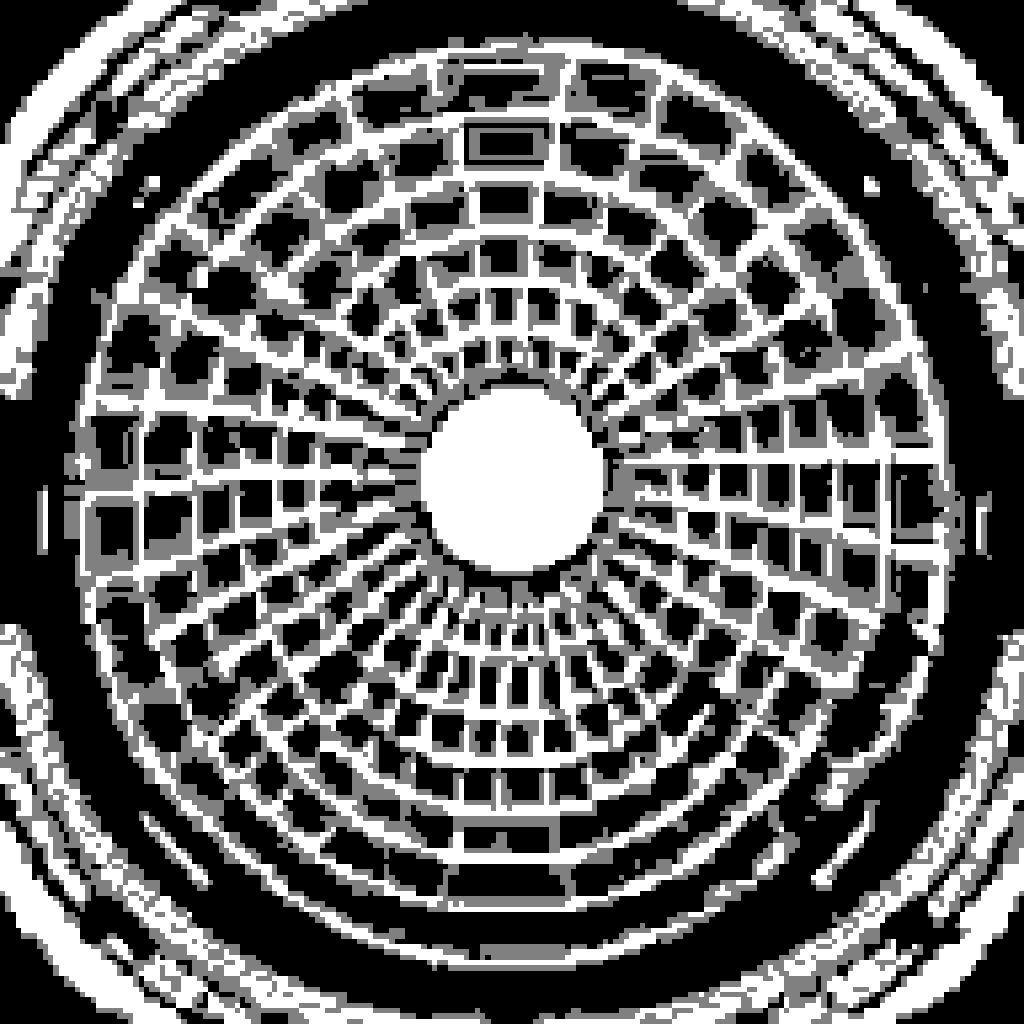
Above you is a dome of unreinforced concrete about 43 metres (142 feet) across. The height from the floor to the top is the same. A sphere of that size would fit inside the room.
At the very top, where you expect a solid crown, there is nothing. The builders left an open circle about 8 metres (27 feet) across. The Romans called it the oculus, the eye.
The porch inscription credits Marcus Agrippa, who built an earlier temple on the site around 25 BC. That building burned. Brick stamps date the present building to the early 120s AD, under the emperor Hadrian. Work may have started under Trajan a few years before. Hadrian kept Agrippa’s name on the front.
Now put yourself in the builders’ shoes. Concrete is strong when you squeeze it and weak when you pull it. A large dome pushes outward at its base, and that push pulls the lower dome apart. More weight at the top means more push at the bottom. You have no steel to tie the dome together.
What do you do?
They took weight out wherever they could. They removed the crown, the part that adds load and carries little. A ring of brick and concrete around the edge of the oculus works in compression and holds its shape. They cut 140 coffers, the sunken square panels, into the inside of the dome. Each one removes concrete that the shell does not need.
They also changed the stone in the mix as the dome rose. Heavy travertine went into the lowest parts. Lighter tufa and brick came next. Light volcanic pumice went into the highest part. The shell is about six metres thick at its base and about one and a half metres at the oculus.
The hole gave back more than lower weight. It is the only window in the dome. A disc of sunlight moves across the coffers and the floor as the day passes. Rain falls in too. The floor slopes gently to small drain holes, and the water runs away.
The dome is no miracle. It has cracks, and engineers have studied them for a long time. It stands anyway, after almost nineteen centuries.
For about 1,300 years no one built a larger dome of any kind. Florence’s cathedral dome passed it in the 1400s, with a different structure of brick and ribs. Modern domes with steel are much larger. Among domes of unreinforced concrete, the Pantheon is still the largest.
The usual fix: close the dome with a solid crown.
What came out: the crown, plus concrete from 140 coffers.
Remove the centre
In the early 1960s, the U.S. Air Force asked the RAND Corporation a grim question. Could a communications network survive a nuclear attack? A RAND engineer named Paul Baran took the problem.
The telephone network of the time ran through central switching offices. Each call held a dedicated circuit through those offices. Destroy a few central offices, and large parts of the country lose contact.
The obvious fix? Harden the centres with concrete, backup power and spare equipment.
Baran removed the centre instead. In a series of RAND memoranda, On Distributed Communications, published in 1964, he described a mesh of many cheap nodes. Each node linked to several neighbours. Each message broke into small blocks, and each block carried its address.
Every node passed each block toward its destination by any route that was open. If an attack destroyed some nodes, the blocks went around the gap.
Baran tested the idea on paper with simulated attacks. When each node had three or more links, the network held together well, even after heavy losses. The design did not need costly gold-plated parts at the centre, because no single part mattered much. Redundancy did the work that hardening used to do.
Baran took the design to AT&T in the mid-1960s. By his own later account, AT&T said it would not work and declined to build it.
In Britain, Donald Davies reached the same idea on his own and gave the blocks their name: packets. He chose the word after he asked a linguist for a term that would translate well into other languages. Packet switching later carried ARPANET, the network that grew into the internet.
The usual fix: harden the centres with concrete and backup power.
What came out: the centre itself.
Remove the trip
Let’s say you need to pay someone in a distant city. For most of history, that meant a trip. Someone had to carry the coins, and someone else could steal them.
Hawala removes the trip. A trader gives money to a broker, called a hawaladar, in one city. That broker contacts a partner broker in a distant city. The partner pays the recipient from his own funds, minus a small fee.
No coins travel.
The two brokers settle the balance later, through goods, through payments in the other direction, or through other brokers. The only thing that moves is a message, and the system runs on trust between brokers.
A broker who cheats loses his partners, and the network drops him. That threat replaces the armed guard.
Writers often say hawala is centuries old. The word appears in Islamic legal texts as early as the 8th century. Some scholars now argue that the modern hawala networks and the old legal term are not the same thing. Its exact origin is unclear. What is clear is that hawala still moves money today, among people that banks serve badly or not at all.
The usual fix: carry the coins, and guard them on the road.
What came out: the trip. Only a message moves.
Remove the single insurer
In the late 1600s, a merchant ship could sink with its whole cargo. One loss could ruin the man who backed it. So few people backed a voyage alone.
Would you?
Merchants and ship owners met at Edward Lloyd’s coffee house in the City of London. The London Gazette first mentions it in 1688. Lloyd did not sell insurance. He sold coffee and shipping news.
In his rooms, a practice grew up. A broker carried a policy for a voyage from table to table. Each backer wrote the share of the risk he would take and signed his name below the last one. That is where the word “underwriter” comes from.
The ship was as likely to sink as before. But no single sinking could bankrupt anyone who had signed. The market that grew from that coffee house still runs today as Lloyd’s of London.
The usual fix: one backer carries the whole risk.
What came out: the single person who carried all of it.
Remove the stock pickers
Let’s say you run a stock fund. You have one job: pick the stocks that will beat the market. You charge fees for that skill. When the fund trails the market, the usual fix is a better picker.
John Bogle took the pickers out.
On 31 August 1976, his new company, Vanguard, launched the First Index Investment Trust. It bought the stocks in the S&P 500 and held them. It hired no stock pickers, so it charged very little.
The idea had a public push behind it. In 1974, the economist Paul Samuelson wrote an essay called “Challenge to Judgment”. He argued that nobody had proved that fund managers could beat the market. He asked someone to start a fund that simply held the S&P 500. Bogle later said he took the essay as a direct call to act.
The launch hoped to raise $150 million. It raised about $11 million, too little to buy all 500 stocks. Critics called it “Bogle’s Folly”. The underwriter offered to cancel the fund.
Bogle refused.
The arithmetic was on his side. Before costs, the average active dollar earns the market return. After costs, it earns less. The pickers were not the edge. They were the cost. S&P’s own scorecard covers the 15 years to the end of 2024. In that period, about nine in ten U.S. large-company funds trailed the S&P 500.
Bogle’s fund is now the Vanguard 500 Index Fund. Across its share classes, it holds well over a trillion dollars.
Look at what came out. Not the stocks. The people paid to choose among them, and the fee that paid those people.
The usual fix: hire better stock pickers.
What came out: the stock pickers, and most of the fee.
Remove most of the work
In The 4-Hour Workweek (2007), Tim Ferriss describes the same 2004 crisis that led him to fear-setting. His supplement business, BrainQUICKEN, ate all his time. He went back to an idea from the economist Vilfredo Pareto. Pareto had noticed that about 20 percent of the people in Italy owned about 80 percent of the land.
The rough pattern shows up in many places. A small share of the inputs produces most of the output.
Ferriss ran his business through it. By his account, he had more than 120 wholesale customers. Five of them brought in about 95 percent of his revenue. A few others brought in little money and most of his stress.
Five.
He stopped chasing the small accounts. He told the two worst customers to change their behaviour or leave. He then looked for new customers like his best five.
He calls this step of his method elimination. Remove the tasks and people that produce little before you try to do the rest faster. In his words, “Doing something unimportant well does not make it important.”
He turns the same knife on information. He tells readers to try a “low-information diet”: no news, no idle web browsing, and no reading that does not serve an immediate need. His point is about cost, not about information as such. Most of it changes nothing you do, and it still costs attention.
The usual fix: work longer days and do every task faster.
What came out: the small accounts and the customers who caused the most stress.
Remove the spark
Back in the 1890s, most engines wasted most of their fuel as heat. Steam engines turned about a tenth of it into work. Gas engines lit their fuel with a spark or a hot tube.
So where do you look for more efficiency? Better spark timing? Better fuel?
Rudolf Diesel removed the igniter. His engine squeezed air until it got hot enough to light fuel by itself. Fuel sprayed into that hot air burned at once. He patented the idea in 1892 and 1893 and built it with Maschinenfabrik Augsburg, later MAN.
The first engines failed. In an early test, a gauge burst. In 1897, a test engine turned about 26 percent of its fuel into work. That was far more than any steam engine of the day.
Why does it work? With no spark to time, you can squeeze the air much harder. Harder squeezing gives a more efficient engine. Today a diesel uses a compression ratio of about 15 to 20. A petrol engine uses about 8 to 12.
Diesels now move most ships, trucks and trains.
The usual fix: better spark timing or better fuel.
What came out: the spark.
Remove the price
In the early 1980s, software companies kept their source code secret. The code was the product. Why give it away?
Richard Stallman did. In 1983 he started the GNU Project to build a free operating system. Anyone could read the code, change it and share it.
In August 1991, a Finnish student named Linus Torvalds posted a note on Usenet. He was writing a free operating system kernel. In his words, it was “just a hobby, won’t be big and professional.”
In 1992, he put Linux under Stallman’s licence, the GNU GPL. Now anyone could copy it, at no cost, as long as they shared their changes too.
Look at what that removed. No price. No owner who controls the code. No permission to ask before you fix a bug.
With those gone, thousands of people and companies worked on the same code. Since 2017, all 500 of the fastest supercomputers on the TOP500 list run Linux. So does every Android phone, through its kernel, and most of the cloud.
The usual fix: keep the code secret and charge for it.
What came out: the price, the owner, and the need to ask.
Think About It
The question: What can I take away?
Adding feels like progress, because you can point at the new thing. Removing feels like loss, so you skip it.
Take away before you add.
Before you add anything, list what you could remove. Weight. Steps. Approvals. Features. People in the loop. Central points that everything depends on.
Then test each item. What breaks if it goes? Often the honest answer is nothing, or something small that you can fix another way.
Look in three places:
- Weight that carries nothing, like the Pantheon’s crown.
- A centre that everything passes through, like the old telephone switch.
- The few customers, tasks or people who cost the most and give the least, as Ferriss found, and as Bogle found with the pickers.
Each place takes a different kind of nerve. The crown is easy to cut. The centre is hard, because someone usually owns it. The difficult customer is hardest, because they still pay you.
One caveat worth naming: some parts look useless and carry hidden load. G.K. Chesterton put this as a parable in his 1929 book The Thing.
A reformer finds a fence across a road and wants it gone, because he sees no use for it. Chesterton’s answer: first find out why someone built it. Then you may take it down.
The Romans kept the Pantheon’s drum walls and removed the crown, because they knew what the crown did.
A worked example. A small charity’s volunteer sign-up form has fourteen fields. Only one person in three who opens the form finishes it. The first idea is to add things: a progress bar, a reminder email, a friendlier welcome message.
Subtract instead. Who uses each field, and when?
The charity needs the name, email, and the days a person can help on day one. It needs the emergency contact only on the first shift. Nobody has read the “How did you hear about us?” answers in two years. Shirt size matters only for the yearly event.
The form drops to four fields. The coordinator collects the other details at the first shift, in person. Nobody had to write a reminder email.
Now check the cut against the fence rule. Did anyone build the “How did you hear about us?” field for a reason? Ask. You may find that a grant report once needed it.
If the grant ended, the field goes. If the grant still runs, move the question to the first shift with the others. Either way, the person at the form now answers only what the charity needs on day one.
The exercise. List every recurring commitment you have: meetings, reports, subscriptions, and the like. Next to each one, write what it gives you. Mark the few that give you most of the value. From the rest, pick one and cancel it this week.
Do not replace it with anything. Wait a month and see who notices. If nobody does, you have your answer. If someone does, you now know what the thing was for.
Ask what it does. Then cut.
Chapter 4: Borrow and Combine
Picture a courtroom in Strasbourg in 1439. Business partners are fighting. One partner, Andreas Dritzehn, died at Christmas. His brothers want his place in the firm. The man they sue came from Mainz. His name is Johannes Gensfleisch, known as Gutenberg.
The witnesses talk about money and secrecy. They talk about a project called “the adventure and art.” One witness says a turner, Konrad Saspach, built a wooden press for the partners. The brothers lose the case. The court records survive. They are the first trace of the work that made Gutenberg famous.
So what were the partners making?
Historians still argue. The firm had a public business too. It cast small metal mirrors for pilgrims who travelled to the relics at Aachen. Pilgrims held the mirrors up to catch the holy light. The partners got the year of the pilgrimage wrong and had to wait a year to sell their stock. The press in the testimony may belong to printing, or to mirrors. The records do not settle it.
Here is what the records do show. One man. Three skills in one room. He knew how to cast metal. He had a press. And he wanted a product that many people would buy in identical copies.
The problem
Let’s say you want a book in 1439. A scribe copies it for you, letter by letter. A long book takes many months. Every copy has its own errors. Every copy costs the same labour as the first.
Woodblock printing exists, but a carver cuts each page as one block. One slip ruins the block. And the block prints only that one page.
Movable type was not a new idea. In China, Bi Sheng made movable type from baked clay in the 1040s. In Korea, printers used metal type in 1377 to print a Buddhist text called the Jikji. There is no good evidence that Gutenberg knew about either. Europe had to solve the problem again.
The parts he borrowed
Screw press. Metal casting. Oil ink. Paper. Go. → Printing.
Take the screw press first. Farmers along the Rhine used screw presses to squeeze grapes for wine and olives for oil. Papermakers used them to press water out of new sheets. A screw press turns a small push on a bar into a large, even force on a flat plate. That is exactly what a printer needs: the same pressure across the whole page, every time. Britannica describes Gutenberg’s press as probably an adaptation of the presses for wine, oil or paper.
Next, metal casting. Goldsmiths and mirror makers knew how to melt soft metals and pour them into moulds. Gutenberg needed thousands of small letters, each one the same height, so they printed evenly. He cast them from an alloy based on lead and tin. His hand-held mould had an adjustable width, so one mould could cast a narrow “i” or a wide “m”. Scholars still debate the exact method for his early type. The principle is clear. Casting turned the letter into a part you could make by the thousand.
Then the ink. Scribes used water-based ink. On metal, water-based ink beads up and gives a weak, patchy print. Flemish painters of the same decades used paints based on linseed oil. An oil-based ink sticks to metal and transfers cleanly to paper. Gutenberg’s ink was a varnish of this kind, dark and glossy.
One caveat worth naming: no recipe survives. The link to the painters is a strong inference, not a record.
Last, paper. Paper had come to Europe from the Islamic world centuries before. By the 1400s, mills in Italy and Germany made it in quantity. Paper cost much less than vellum, which comes from calfskin.
The part that was his
So what was his? The system that joined the parts.
A compositor set metal letters into lines. The lines locked into a frame. Leather balls put ink onto the type. A sheet went onto the type, and the screw pressed it. Then the compositor took the type apart and reused every letter for the next page.
That last step is the core of the idea. The expensive work, cutting the shape of each letter, happened once. After that, a page cost only the time to set it and press it.
Around 1455, Gutenberg’s shop in Mainz finished a Latin Bible with 42 lines on most pages. The run was probably between 160 and 185 copies. Most were on paper and the rest on vellum. About 48 copies survive, complete or in large parts.
Did he get rich? No. He had borrowed heavily from a Mainz lawyer named Johann Fust. In 1455 Fust sued him for the debt. Fust and Gutenberg’s former assistant, Peter Schöffer, took over much of the equipment and kept printing. Within a few decades, presses ran in cities across Europe.
Why the combination worked
Every part Gutenberg borrowed had decades or centuries of proof behind it. Winemakers had already found the faults in screw presses. Metalworkers had already learned how alloys behave in a mould. Painters had already learned how oil dries. Gutenberg did not have to solve those problems. He had to solve only the joints between them.
That is why borrowing pays. A new invention carries risk in every part. A combination of proven parts carries risk only where the parts meet. You shrink the problem down to the joints.
Borrow the parts. Build the joints.
It also explains why the person who combines is often an outsider to the trade. A scribe knew books. A scribe did not know presses or alloys. Gutenberg knew metal first and books second.
I find that the most useful part of the story. The answer to your problem often sits in someone else’s trade.
Borrowed from: the wine press.
Used for: pressing ink onto paper.
McLean’s box
Back in 1956, Malcom McLean owned one of the largest trucking firms in the United States. He did not own a ship. On April 26 of that year, a converted wartime tanker called the Ideal X left Port Newark for Houston. On its deck sat 58 metal boxes. They were truck trailer bodies with the wheels taken off.
McLean liked to say the idea came to him in 1937. He was a young driver waiting a whole day in Hoboken to unload cotton bales. He watched dockworkers move each bale by hand. The historian Marc Levinson, in The Box, treats that memory with doubt. The record shows a more careful businessman. McLean wanted to beat traffic on the roads, and he studied the costs.
The costs made the case. Levinson reports that loading loose cargo onto a ship cost about $5.83 a ton in 1956. McLean’s estimate for the Ideal X was about 16 cents a ton.
McLean did not invent the container. Railways and the US Army had used boxes before. His move was to borrow the unit of trucking, the trailer, and make it the unit of shipping. The box went from the road to the ship, and nobody opened it. He already had the tanker, the trailers and the cranes. He built the joint between them.
Borrowed from: the truck trailer.
Used for: shipping cargo by sea without opening the box.
Jacquard’s cards
Imagine you weave patterned silk in 1800. You need two people at the loom. You throw the shuttle. A helper, called a draw boy, works at the loom and pulls cords to lift the right threads for each row. It is slow. The helper makes mistakes.
Joseph-Marie Jacquard patented a loom attachment in 1804 that did the draw boy’s job. A chain of punched cards ran through the machine. Each card stood for one row of the pattern. Where a card had a hole, a hook passed through and lifted a thread. No hole? The thread stayed down.
Jacquard borrowed the cards. Basile Bouchon had used punched paper to control a loom in 1725. Jean-Baptiste Falcon changed the paper to a chain of cards in 1728. Jacques de Vaucanson built a more automatic version in the 1740s. Jacquard combined these ideas into a machine reliable enough for real workshops.
Then the idea moved again. Charles Babbage designed his Analytical Engine to take its instructions on punched cards. In 1843 Ada Lovelace wrote that the engine “weaves algebraical patterns just as the Jacquard-loom weaves flowers and leaves.” A device from silk weaving became the input for a computer design.
Borrowed from: the punched cards of earlier looms.
Used for: a loom that lifts threads without a draw boy.
Curitiba’s surface subway
In the early 1970s, Curitiba in southern Brazil was growing fast. The standard answer for a growing city was a subway. The city could not pay for one. Jaime Lerner, an architect who became mayor in 1971, asked a question. What does a subway actually do for its riders?
A subway is fast because of a few features:
- Trains have their own track.
- Riders pay before they board.
- Riders step on from a platform at floor level, so boarding takes seconds.
None of these features needs a tunnel.
So Curitiba borrowed the features and left out the tunnel. In 1974 express buses began to run in lanes reserved for them. In 1991 the city opened its first tube stations. These are glass cylinders. You pay at the entrance and wait on a raised floor. The bus arrives, a ramp drops, and you walk straight on. Cities around the world now copy the system as bus rapid transit.
Borrowed from: the subway.
Used for: fast buses with no tunnel.
A burr on a dog
In 1941 the Swiss engineer George de Mestral came home from a hunting walk with his dog. Burdock burrs covered the dog’s fur and his own trousers. He put a burr under a microscope. Its surface had hundreds of tiny hooks. The hooks caught on any loop of fur or fabric.
De Mestral spent about a decade trying to copy the hook in a material he could make in quantity. Nylon finally worked. He took out patents in the 1950s, with the US patent granted in 1955. He named the product Velcro, from the French velours (velvet) and crochet (hook).
The burr had already solved fastening without a knot, a button or glue. De Mestral’s job was to see the solution and find a way to manufacture it.
Borrowed from: the hooks on a burdock burr.
Used for: a nylon fastener called Velcro.
CRISPR
Let’s say you want to change one gene in a living cell. Around 2010, the tools for that were slow. Each edit needed a custom protein, and building one took months.
Bacteria had a faster tool. They store short pieces of viral DNA in their own genome. When the same virus comes back, a protein called Cas9 uses a copy of that piece as a guide. It finds the matching DNA and cuts it.
Food scientists saw this first. In 2007, researchers at the yogurt firm Danisco showed that the system protects bacterial cultures from viruses. In 2012, Jennifer Doudna and Emmanuelle Charpentier showed that you can write the guide yourself. Change the guide, and Cas9 cuts any DNA you choose.
So a defence system from bacteria landed in every genetics lab. Doudna and Charpentier shared the 2020 Nobel Prize in Chemistry.
Borrowed from: a bacterial defence against viruses.
Used for: cutting any DNA you choose.
Cinchona bark and quinine
Spanish writers in Peru and Quito reported that local people taught them to use the bark of a tree for fevers. By the 1630s or 1640s, Jesuits were shipping the bark to Europe. Doctors there had bloodletting and purges. The bark worked better.
Nobody has found direct proof that Andean healers used the bark before the Spanish came. The colonial reports are the main evidence. And malaria was a new disease to them, so any older use was for other fevers.
The bark was the main treatment for about two centuries. In 1820, Pelletier and Caventou isolated quinine from it. Quinine then led the treatment until synthetic drugs such as chloroquine took over in the 1940s. Together, bark and quinine served for about three hundred years.
Borrowed from: local people in the Andes, who used the bark for fevers.
Used for: treating malaria in Europe.
The vedalia beetle
In the 1880s, an insect from Australia was killing California’s orange groves. It was the cottony cushion scale. Sprays and gas did not stop it.
Charles Valentine Riley, the chief entomologist of the US government, asked a simple question. Why is this pest not a problem in Australia? Something there must eat it.
Congress did not allow his staff to travel abroad. So Riley sent his collector, Albert Koebele, to Australia with an official delegation to a Melbourne exhibition in 1888. Koebele found a small ladybird beetle, the vedalia, eating the scale. He shipped some hundreds of them to California.
The beetles went into a tented orange tree in Los Angeles. They ate the scale and then spread to the next trees. By about 1890, the pest was under control across the state.
The project cost about $1,500, not counting salaries. With salaries, under $5,000.
The answer came from the pest’s home country. Biological pest control borrowed its first big win from an Australian food chain.
Borrowed from: an Australian food chain.
Used for: controlling a pest in California’s orange groves.
The Three Sisters
Haudenosaunee farmers and other Indigenous peoples of North America planted corn, beans and squash in the same mound. They called them the Three Sisters.
Each plant does a job for the others. The corn stalk gives the bean a pole to climb. The bean carries bacteria in its roots that take nitrogen from the air into the soil. The squash spreads wide leaves over the ground, so the soil stays wet and fewer weeds grow.
Does it beat one crop per field? In 2016, the soil scientist Jane Mt. Pleasant compared the two. The Three Sisters gave more food energy and more protein per hectare than any of the three crops grown alone. The bean and squash yields went down, but the total went up.
Tests with modern seed and other soils give mixed results. The method suits the land and the varieties it grew up with.
Borrowed from: no other trade. This story combines three crops in one mound.
Used for: more food energy and protein per hectare.
Pilkington’s float glass
Alastair Pilkington worked for the glass firm Pilkington Brothers. He was not a member of the family. In 1952 he had an idea: pour molten glass onto a bath of molten tin. The glass floats. Gravity and surface tension make both sides flat and bright. No grinding. No polishing.
The company tells a story that he got the idea while washing dishes. It also says the story is mostly myth. And the idea itself was not new: Henry Bessemer had tried glass on tin in the 1840s, without commercial success.
So Pilkington’s work was to make an old idea run. He and Kenneth Bickerstaff spent about seven years and a large research budget on it. They announced the process in 1959. The firm then licensed it to glassmakers around the world. Float glass now makes most of the world’s flat glass. One source says over 90%.
Borrowed from: Bessemer’s failed idea of glass on tin.
Used for: flat glass with no grinding or polishing.
Carbon-14 dating
Imagine you are an archaeologist in 1940. You find a piece of wood in a dig. How old is it? You can say which layer is older. But you cannot put a number on it.
The answer came from physics. Cosmic-ray researchers had found that cosmic rays make neutrons in the upper air. Willard Libby, a chemist at the University of Chicago, worked out what follows. The neutrons turn some nitrogen into radioactive carbon-14. Plants take it in, and animals eat the plants. When a living thing dies, the intake stops. The carbon-14 then decays at a steady rate.
So you measure what is left, and you get the time since death. Libby tested the method on wood of known age, including wood from Egyptian tombs. He published his first dates in 1949 and won the 1960 Nobel Prize in Chemistry.
The amount of carbon-14 in the air changes over time. Labs now correct their dates against tree rings.
Borrowed from: cosmic-ray physics.
Used for: putting a number on the age of old wood.
Townshend’s crop rotation
Charles Townshend did not invent the rotation that carries his name. That is the point of this story.
For centuries, English farmers left part of their land empty each year. The soil needed rest, and the fallow field grew nothing.
Townshend, a British politician, served as a diplomat in the Dutch Republic from 1709 to 1711. Farmers in the Low Countries used long rotations with turnips and clover. He watched a trade that had already solved his country’s problem.
When Townshend retired to his Norfolk estate in 1730, he promoted a four-field version: wheat, turnips, barley, then clover. People called him “Turnip” Townshend.
The “rest” crops did work. Clover adds nitrogen to the soil. Turnips feed animals through the winter, and the animals give manure. So every field produced something every year, and the soil stayed fertile.
Some English farmers grew turnips in rotation decades before him. The Dutch and Flemish had used the method longer still. Townshend’s part was to carry it home, put his name and his estate behind it, and make it famous in England. By 1800, the Norfolk four-course rotation was common.
Borrowing is not a lesser kind of invention. The method already worked. He gave it a name people could repeat.
Borrowed from: Dutch and Flemish crop rotations.
Used for: English fields that produce something every year.
McDonald’s and the assembly line
In 1948, Richard and Maurice McDonald ran a busy drive-in in San Bernardino, California. It had carhops, a long menu and plates that broke. They closed it for a few months and rebuilt it.
They borrowed the logic of Henry Ford’s assembly line. What exactly did they take? Three things. One fixed product line: the menu went from about 25 items to 9. Workers who each did one task, such as grill, fries or shakes. And a layout built for flow. The brothers drew the kitchen in chalk on a tennis court and had staff walk through the steps.
They called it the Speedee Service System. The carhops left. Customers walked up to a window. Paper wrappers replaced plates. The food came fast and cheap.
They did not use a moving line like Ford. They borrowed the division of work and the fixed product, not the conveyor. Ray Kroc later franchised the system across the country.
Borrowed from: Ford’s assembly line, without the conveyor.
Used for: fast, cheap food at a walk-up window.
Checklists from pilots
In 1935, Boeing’s new Model 299 bomber crashed on a test flight in Ohio. The pilot was skilled. The plane was simply too complex to fly from memory. He forgot to release a lock on the controls.
More training was the obvious answer. The test pilots wrote a checklist instead, for takeoff, flight and landing. With it, crews flew the plane, later the B-17, for 1.8 million miles without an accident.
Atul Gawande, a surgeon, tells this story in The Checklist Manifesto. He asked a question. Surgery is complex too. Why not use the pilots’ tool in the operating room?
He led a team for the World Health Organization that wrote a 19-item surgical checklist. Confirm the patient. Confirm the site. Make sure everyone in the room knows each other’s name. They tested it in eight hospitals around the world. In 2009, they reported that major complications fell by about a third and deaths fell by almost half.
Skilled people forget simple steps. Pilots learned that first.
Borrowed from: the pilots’ checklist.
Used for: fewer complications and deaths in surgery.
Monier’s iron mesh
Joseph Monier was a Paris gardener. He wanted large pots and tubs that did not break like clay or rot like wood. Concrete pots cracked.
He did not look for a better concrete. He borrowed from the ironworker. He set a mesh of iron inside the concrete. He patented the pots in 1867, then pipes, panels, bridges and beams over the next decade.
Monier was not the first. Joseph-Louis Lambot showed an iron-reinforced concrete boat in Paris in 1855. François Coignet built with iron and concrete too. But Monier’s patents spread the method, especially in Germany.
Why does the combination work? Concrete is strong when you squeeze it and weak when you pull it. Iron is strong in tension, so the bars carry the pull that cracks the concrete. Both materials also grow and shrink by about the same amount with heat, so they stay bonded. And the alkaline concrete protects the iron from rust.
Two trades. Two materials, each strong where the other is weak. The gardener’s job was the joint between them.
Which trade next door has the material that is strong where yours is weak?
Borrowed from: the ironworker’s mesh.
Used for: concrete that does not crack when you pull it.
Think About It
The question: Who has already solved this somewhere else?
This question is hard to use as it stands. Your problem has your trade’s name on it. A scribe asks how to copy books faster. Nobody else copies books, so nobody else seems to have the answer.
The trick: strip the problem down to its function. Then look for the trades where that function is the whole job.
A worked example. Let’s say you run a volunteer food bank with a Saturday pickup. The line forms at seven and runs past noon. Each family waits while a volunteer fills a bag from the shelves.
In your own terms, the problem is “our food bank line is too long.” Stripped to its function, it is “many people each collect a different set of items, and the collection takes too long.”
Now ask: who does that for a living?
- Grocery stores do it with click-and-collect. The customer orders ahead, and staff pack before the customer arrives.
- Curitiba does it with prepaid tube stations. The slow step happens before the bus arrives.
- Restaurants do it with a ticket rail. Orders queue in writing, not in people.
You borrow from all three. Families fill in a short paper or phone order during the week. Volunteers pack bags on Friday evening, each with a number. On Saturday a family gives its number and takes its bag. The slow step, choosing and packing, has moved out of the line.
Nothing in that plan is new. Every part already works somewhere else. Your only job is the joints between the parts.
Exercise. Write down one problem you have this week. Rewrite it as a verb and an object, with your trade’s words removed. For example, “move a box” or “fasten two pieces of cloth.” List three trades where that verb is the main job. Pick one. Spend twenty minutes finding out how it does the job. Write down one mechanism you could copy.
Strip the name off. Steal the parts.
Chapter 5: Design the Environment
Imagine you work at the General Motors plant in Fremont, California. There is one rule above all others.
Never stop the line.
In 2010 the radio programme This American Life interviewed people who had worked there in the 1970s and early 1980s. One recalled a man who fell into the pit beside the line. The line kept running. A union leader said that a worker who stopped the line for a problem was fired.
The managers had a reason. They believed that if workers could stop the line, they would do it to get a break. So the plant gave workers no way to stop it.
Now say you spot a fault. What do you do? You can ignore it. Or you can try to fix it while the car moves away from you. Either way, the fault goes down the line. Other parts go on top of it. At the end of the line, repair crews pull cars apart to fix what you could have fixed in a minute. Many faults stay hidden until a customer finds them.
GM closed the Fremont plant in 1982.
A loom that stopped itself
In 1924 Sakichi Toyoda finished his Type G automatic loom. When a single thread broke, the loom stopped by itself.
Before this, a broken thread meant a run of bad cloth until a person noticed. One worker had to watch each loom. A loom that stopped itself made the fault impossible to miss. It also freed the worker to look after many looms at once.
Toyoda’s company later moved into cars. At Toyota, the engineer Taiichi Ohno applied the loom’s principle to people. If a machine should stop when something goes wrong, a person should be able to stop the line too. Toyota calls the principle jidoka.
The cord
The tool for this is the andon cord. It is a rope that runs along the assembly line within reach of every worker. You see a problem. You pull the cord.
The common story is that one pull stops the whole factory. It does not. Here is what happens:
- The first pull turns on a light and plays a short tune.
- A team leader comes to your station at once.
- The line keeps moving to the end of the current work cycle, which is a fixed point.
- If the team leader fixes the problem before that point, the line never stops.
- If not, that section of the line stops at the fixed point.
Small buffers between sections keep the rest of the plant running.
So the cord does two things. It makes asking for help instant. And it makes stopping the line normal, because a stop is the result of a failed fix, not a protest.
Fremont again
In 1984 GM and Toyota reopened the Fremont plant as a joint company called NUMMI. Toyota agreed to hire most of the old workforce. Before the plant opened, Toyota flew groups of these workers to Japan to learn its system.
One of them was Earl Ferguson, who had worked for GM since 1964. In Japan he pulled an andon cord for the first time. A bolt had gone in crooked. The team stopped the line, reamed the hole and put the bolt back in correctly. Nobody sent the car down the line for others to bury under trim. “One bolt changed my attitude,” he told This American Life.
Same people. Different rule. Different tools around them.
The University of Michigan professor Jeffrey Liker said that NUMMI’s defect rate was soon one of the best in America. Its cars matched the Corollas that came from Japan. Absenteeism and grievances dropped.
The cord itself is cheap. Its power comes from everything around it. In 2007 the BBC reported a comparison. At Toyota’s plant in Georgetown, Kentucky, workers pulled the cord about 2,000 times a week. At a new Ford truck plant in Dearborn, Michigan, with similar cords, workers pulled them about twice a week. The BBC blamed generations of mistrust between workers and managers.
Would you pull a cord that gets you blamed? Nobody does.
Relying on: repair crews to fix faults at the end of the line.
Designed so: one pull of a cord calls help and can stop the line.
The springs in the dish
In 1961 the engineer Shigeo Shingo, a consultant who later worked with Toyota, visited a factory called Yamada Electric. Workers there assembled a small switch with two push buttons. Each button needed a spring underneath. Sometimes a worker forgot a spring. The fault often showed up only after the switch reached a customer. Then the company had to send someone to fix it.
The managers had tried telling the workers to be careful. That did not work.
Shingo changed the steps instead. First, take two springs from the supply and put them in a small dish. Then assemble the switch from the dish. Spring left in the dish? You missed one. You see the mistake before the switch leaves the bench.
Shingo first called these devices baka-yoke, which means “fool-proofing.” He changed the name to poka-yoke, “mistake-proofing,” because the first name insulted the workers. The change is the point. The worker was not the fool. The process gave a careful person a way to make an invisible mistake.
Fix the room, not the person.
You might object that the dish does not prevent the mistake. Fair. The dish makes the mistake show itself at once, which is the next best thing. Shingo’s later devices went further. Some were fixtures that a wrong part would not fit. Some stopped the machine if a step was missed.
Put the cord and the dish together, and you get three levels of design:
- Make the wrong action impossible.
- If you cannot, make the mistake visible at once.
- Make it easy for the person who sees it to stop and fix it.
Relying on: workers to remember every spring.
Designed so: a missed spring stays in the dish, where you see it.
The box on the form
In 2003 the researchers Eric Johnson and Daniel Goldstein published a short paper in Science called “Do Defaults Save Lives?” It compared organ donor rates across European countries. In some countries, you were a donor only if you opted in. In others, you were a donor unless you opted out.
The gap was large. In Germany, an opt-in country, about 12 percent of people were in the donor pool. In Austria, an opt-out country, the figure was 99.98 percent. The authors also ran an online experiment. When the default was “donor,” 82 percent stayed donors. When the default was “not a donor,” only 42 percent chose to become one.
Why? Most people never make the choice. They accept whatever the form already says.
One caveat worth naming, and it is part of the lesson: a box on a form is not an organ in a hospital. Critics point out that Austrians are never handed a form with that box on it. The 99.98 percent counts the people who did not take steps to object. Doctors in many opt-out countries still ask the family before they take organs.
Spain has some of the highest donor rates in the world. It passed an opt-out law in 1979. Rafael Matesanz, who led Spain’s national transplant organization, argued that the law was not the cause. He credited the organization set up in 1989, with trained coordinators in hospitals who speak to families. Wales switched to a soft opt-out in 2015. A study of the first period after the change found deceased donors went from 101 to 104. Its authors found no step change.
The default moved the form. Design the environment, but check which part of the environment does the work.
Relying on: people to opt in as organ donors.
Designed so: the form makes “donor” the default.
Two columns that must agree
Double entry is old. Florentine and Genoese merchants used it for more than a century. In 1494 Luca Pacioli, a Franciscan friar and mathematician, wrote it down in a Venice textbook. Printing spread it across Europe.
Every transaction goes into the books twice. Say you buy cloth for cash. Cloth goes up on one side, and cash goes down on the other. At any time, the total of one side must equal the total of the other.
Double entry does not prevent mistakes. A clerk can still write the wrong number. What double entry does is like Shingo’s dish. Many one-sided mistakes make the totals disagree, so the books show you something is wrong.
Know its limits:
- Leave out a whole transaction, and both sides miss it. The books still balance.
- Post the right amount to the wrong account, and the books still balance.
- Make two equal mistakes, and they can cancel each other out.
Double entry is an alarm for one class of error. It does not prove the books are true. Auditors exist because of that gap.
Relying on: clerks to write every number right.
Designed so: many one-sided mistakes make the totals disagree.
The better shot that lost
In the 1961-62 season, Wilt Chamberlain shot his free throws underhand. Chamberlain was the most dominant scorer in professional basketball, but he was a poor free-throw shooter. That season he made 61.3 percent of them, his best mark ever. On March 2, 1962, he scored 100 points in one game against the New York Knicks. He made 28 of 32 free throws that night.
Then he went back to shooting overhand. His numbers fell. In the 1967-68 season he made 38 percent.
Malcolm Gladwell tells this story in “The Big Man Can’t Shoot,” a 2016 episode of his podcast Revisionist History. Gladwell explains that the underhand shot is a simpler motion and easier to repeat. Rick Barry, a Hall of Fame forward, shot underhand his whole career. When he retired in 1980, his NBA free-throw mark was 90 percent, the record at the time.
So why did Chamberlain stop? Gladwell quotes his autobiography: “I felt silly, like a sissy, shooting underhanded.”
Chamberlain knew the better method. He had the proof in his own numbers. The method lost anyway, because it looked foolish in front of thousands of people. Gladwell uses the sociologist Mark Granovetter’s threshold model to explain this. People do not act on belief alone. They act when enough others around them act first.
I think this is the hardest part of the environment to see. Not a cord. Not a form. What people will think of you. The GM workers in Fremont did not pull a cord that did not exist. Chamberlain did not use a shot that made him look silly. In both cases, the right action had a cost that the people in charge did not count.
What is the better method in your shop that nobody uses because it looks silly?
Relying on: Chamberlain to choose the better shot.
Designed so: nothing. The shot looked silly, so the better method lost.
The coil in the box
By the early 2010s, a stock order was a race. High-frequency firms saw your order reach one exchange. Then they beat it to the next exchange and bought ahead of you.
Everybody answered with more speed. Faster lines. Servers closer to the exchange.
Brad Katsuyama, a trader at the Royal Bank of Canada, asked a different question. What if the fast traders could not use their speed? In 2012 he and his team founded IEX. Michael Lewis tells the story in Flash Boys.
IEX put about 38 miles of optical fibre, coiled up, in a small box. Every incoming order passes through the coil. The trip adds about 350 microseconds. You cannot feel that. But the exchange’s own view of market prices does not take the detour. So IEX always knows the new price before a fast trader can act on the old one.
The race still exists. It just has no prize at IEX.
The SEC approved IEX as a national stock exchange in June 2016, after a long fight.
Relying on: more speed to beat the fast traders.
Designed so: a coil of fibre delays every order, so speed wins nothing.
The machine that fixed itself
In 1947 Richard Hamming worked at Bell Labs. He was junior, so he got time on the relay computer only at weekends. He set his jobs running on Friday and went home.
The machine could detect an error. When it found one, it dropped his job and moved to the next. On Monday he came back to nothing.
Hamming was angry. If the machine can find an error, he asked, why can’t it find where the error is and fix it?
So he designed a code that does exactly that. You add a few extra check bits to each block of data. A single flipped bit changes the check bits in a pattern. The pattern points to the bad bit, and the machine flips it back. Nobody has to step in. He published the method in 1950.
The code does not stop errors. The relays still fail. It catches a mistake and corrects it before it does harm.
That is still a design of the environment. You do not ask the hardware to be perfect. You build a system where one mistake cannot spoil the result.
Relying on: the hardware to make no errors.
Designed so: check bits find a single bad bit and fix it.
Stop scattering
Farmers once sowed by hand. You walked the field and flung seed from a bag. That is broadcasting. Much of the seed fell on the surface. Birds ate it. Some fell in clumps and choked itself.
Around 1701 Jethro Tull, an English farmer, built a seed drill. It cut a row of narrow furrows, dropped the seed in at a set depth and covered it. One pass. Every seed went where the machine put it.
How much did it save? The Science Museum in London cites figures from Tull’s time. The drill used about one bushel of seed per acre. Broadcasting used between two and a half and four and a half. Tull also claimed his yields were roughly double. Those yields are his own claims. I found no independent measure, so treat them as a sales pitch with some truth in it.
Farmers did not rush to copy him. The drill cost money and Tull’s other ideas were odd. Drills became common only in the 1800s.
But the principle holds. The hand could scatter seed wrong. The drill could not.
Relying on: the hand to scatter seed well.
Designed so: the drill puts each seed at a set depth.
Five signs, one minute
Back in the early 1950s, nobody had a standard way to check a newborn. Staff in the delivery room watched the mother. A baby in trouble could go unnoticed for minutes that mattered.
Virginia Apgar was an anaesthesiologist at Columbia University. She proposed a score in 1952 and published it in 1953. You check five signs: heart rate, breathing, muscle tone, reflexes and colour. Each gets 0, 1 or 2. You score at one minute after birth and again at five minutes.
It takes seconds. It needs no new drug and no new machine. A low score tells everyone in the room that this baby needs help now.
So the check became the default. Every baby got looked at, on a clock, in the same way.
People often say the Apgar score cut infant deaths around the world. Infant deaths did fall in the decades after 1953. But care also changed in many other ways in those years. I found no study that separates the score’s effect from the rest. What the score surely did is make the first look at every baby routine.
Relying on: staff to notice a baby in trouble.
Designed so: every baby gets a five-sign score at one and five minutes.
Think About It
The question: How do I make the right thing the easy thing?
Most advice about mistakes speaks to the person. Be careful. Try harder. Remember the springs.
That advice fails. Careful people still make mistakes, and the environment keeps pushing the other way. So change the environment instead of the person.
You have four tools:
- Make the wrong thing impossible.
- If you cannot, make the mistake show itself at once.
- Make it easy and safe to stop.
- Set the default to the right choice.
Then check a fifth thing. Does the right choice cost the person something, such as time, face or blame?
A worked example. Let’s say you and a partner run a two-person landscaping firm. You do about fifteen jobs a week. Every month, a few jobs never get invoiced. You lose money you earned. You have told each other to remember many times.
Make it impossible. Your job app does not let a job close until an invoice exists for it. The wrong state, a closed job with no invoice, cannot happen.
Make it show at once. Every Friday, one of you counts the jobs done and the invoices sent. The two numbers must match, like Pacioli’s columns. A mismatch means a missing invoice, and you find it that week, not at year end.
Make it easy to stop. A problem can block an invoice, such as a dispute about the price. The worker flags it in the app on site. The flag goes to the owner’s phone. Nobody has to remember to mention it later.
Set the default. New clients pay by card on file, charged when the invoice goes out. Paying on time becomes what happens if nobody does anything.
Check the cost. Why do the invoices slip? Because invoicing happens at night, after ten hours of work. So you move it to the truck, before you drive to the next job. The right action now costs two minutes in the middle of the day instead of an hour at night.
Exercise. Pick one mistake that happened twice in the last month, at work or at home. Write it down. Ask the four questions in order:
- Can I make it impossible?
- Can I make it show at once?
- Can I make stopping easy?
- Can I make the right choice the default?
Then ask what the right action costs the person who has to do it. Change one thing this week. Watch whether the mistake comes back.
Easy to do right. Safe to stop.
Chapter 6: Exploit the Constraint
A drum in Kampen
Build me a kidney.
Pick a budget: none. Pick a lab: none. Pick your parts: whatever the town keeps in its sheds. Go.
Stuck? Let’s see how one doctor did it.
It’s 1939. You are an unpaid junior doctor in internal medicine at the University of Groningen. You have four patients. One is a 22-year-old man whose kidneys have failed. You watch him die slowly, as waste builds up in his blood.
That doctor was Willem Kolff.
Kolff did some arithmetic. Healthy kidneys remove urea from the blood every day. Could a doctor take out about 20 grams of urea a day by some other means? Then the man might have lived.
So Kolff tried a cheap test. He took a 40-centimetre length of cellophane sausage skin. No meat. He put in 25 millilitres of blood with extra urea added. He tied the ends and shook the tube in a bath of salt water.
Five minutes later, almost all the urea had passed out through the cellophane.
Why? Cellophane has very small pores. Small molecules such as urea pass through them. Blood cells and proteins stay inside. Kolff multiplied the length of his test tube by twenty. That told him how much tubing a real machine would need.
Then the war arrived.
Germany occupied the Netherlands in May 1940. A Nazi sympathizer took control of Kolff’s department in Groningen, and Kolff left. In July 1941, he became the first full-time physician at the city hospital in Kampen. Kampen is a small town on the IJssel river.
Now look at what he had to work with. No research budget. No laboratory staff. The occupation took metal, rubber and fuel for the German war effort. Kolff could not order parts. He had to build with what a small Dutch town had in its sheds and factories.
So he went to a local enamel factory and asked its director, H. Th. J. Berk, for help. Together they tried five designs.
The one that worked was simple. They wrapped a long run of cellophane tubing around a large drum made of wooden slats. The drum turned slowly in an enamel tank of salt solution. Its lower third sat under the liquid.
As the drum turned, gravity moved the blood along the tubing. The blood went in and out through the hollow axle of the drum. The hard part was the joint between a fixed rubber tube and a turning drum. It could not leak. Kolff found one in the cooling system of a Ford car.
The Rijksmuseum Boerhaave in Leiden lists the parts. The list reads like a scrap yard:
- wooden slats
- a bicycle chain
- sausage casing
- rubber tubes
- a sewing-machine motor
- parts of a Model T Ford’s cooling system
- aluminium from a shot-down aircraft
- a tank from the enamel factory
Each part answered a shortage. The membrane? A food wrapper Kolff could buy. The pump? Gravity. The hardest joint? A car part. Nothing in the machine needed a factory that wartime Kampen did not have.
In 1943, Kolff treated his first patient with the drum. She was a 28-year-old housemaid with chronic kidney failure. The team started very slowly, with 50 millilitres of blood at a time. Later they cleaned 12 litres, then 20, in one session. Her blood urea fell. She became alert enough to ask for a newspaper.
But every treatment needed a new connection to an artery or a vein. After the twelfth treatment, the team could find no more places to connect the machine.
She died.
The next two years were hard. By Kolff’s own count, only one of the first 15 patients after her lived. That one was a 52-year-old man with a blocked ureter. The drum lowered his blood urea, but a doctor also cleared the blockage the next day. Kolff never claimed that the machine saved him.
Put yourself there. One survivor in fifteen, and you can’t even take credit for him. Do you build another drum?
On 11 September 1945, Kolff treated his seventeenth patient. Maria Schafstaat was 67 years old and in a coma from liver and kidney failure. She was in prison with other Dutch collaborators of the Nazi occupation. Kolff treated her anyway.
After eight hours on the drum, she opened her eyes. Kolff wrote that her first words were “I am going to divorce my husband!”
She lived for seven more years.
Kolff had built eight machines during the war. He kept four of them in different parts of Kampen, so one bombing raid could not destroy them all. After the war, he gave machines to hospitals in London, New York and Montreal. The last one went to Poland. Nobody heard of it again.
Here’s the part I like best. A machine built from common parts is a machine other doctors can copy. Hospitals abroad studied the drum and built their own versions.
Kolff kept the habit after he moved to the United States. In the 1950s, his “twin-coil” kidney wrapped cellophane around a fruit-juice can. In the 1960s, his team ran dialysis coils in an ordinary household washing machine. It was hard to beat.
The shortage set the design: cheap, simple, and easy to copy.
Make the limit the method.
The limit: no budget, no lab, and wartime shortages.
How it helped: he built the drum from common parts, so others could copy it.
More stories
M-Pesa: no branches, many shops
Back in the early 2000s, only a small share of Kenyans used a bank. Branches were few outside the cities. Say you worked in Nairobi and wanted to send money home. You sent it by hand, by bus, or with a friend.
A bank would solve this with branches, staff and cash machines. Kenya did not have them, and building them would take decades. But Kenya already had something else: mobile phones, and thousands of small shops that sold prepaid airtime.
Vodafone and the Kenyan operator Safaricom began with a different goal. The UK’s Department for International Development gave them a grant. In 2005, they piloted a phone system for microloan repayments with a Kenyan lender called Faulu.
The repayment feature did not work well. But the people in the pilot used the system to send money to each other.
So Safaricom dropped the loan features and launched M-Pesa in 2007.
Here’s how it works. You give cash to an airtime shop, and the shop credits your phone. You send the credit to another phone by text menu. The person at the other end takes it to another shop and gets cash. It works on the cheapest handsets, with no internet.
See the shape? No branch network, so the shops became the branches. Basic phones, so text menus and not apps.
In 2016, the economists Tavneet Suri and William Jack published a study in Science. They estimated that access to M-Pesa lifted about 194,000 Kenyan households, about 2 percent, out of extreme poverty. The effect was strongest for households headed by women.
You will often read that half of Kenya’s GDP “flows through” M-Pesa. Be careful with that one. The fact-checking group Africa Check found that the figure depends on what you count. Some figures add up all mobile money, not only M-Pesa. Official estimates for recent years put all mobile money transactions at roughly 30 to 50 percent of GDP, depending on the year.
The limit: few bank branches and only basic phones.
How it helped: airtime shops became the branches, and text menus replaced apps.
Nicolas Appert: no theory, poor tin
Nicolas Appert was a Paris confectioner. In 1795, he began to look for a way to keep food from spoiling. The French army needed food that could travel with soldiers and sailors. Salting and drying changed the taste and did not suit all foods.
Now try on his limit. Nobody in his time knew why food spoils. Bacteriology did not exist.
No theory to reason from. So what’s left? Test, change one thing, and test again.
That’s what Appert did. He filled champagne bottles with food, sealed them tightly, and heated them in boiling water. Later he used thick glass bottles with corks held down in a press. Why not tin? French tinplate at the time was of poor quality.
In 1804, he opened a bottling works at Massy, south of Paris. The French navy found his bottled food better than salted stores.
In 1810, the French government paid Appert 12,000 francs on one condition: he had to publish his method. He did, in a book printed in 6,000 copies. That same year in Britain, Peter Durand patented a version that used tin cans.
Appert never learned why his method worked. He did not need to. Without a theory, he trusted only results. His results held for decades before science explained them.
The limit: no theory of spoilage, and poor French tinplate.
How it helped: he tested, changed one thing, and trusted only results.
Vivek Ranadivé: a team that could not shoot
Vivek Ranadivé grew up in Mumbai, playing cricket and soccer. He founded a software company in California. He knew almost nothing about basketball. Then he agreed to coach his 12-year-old daughter’s team in Redwood City.
Picture the team. The girls were small. Many of them could not shoot well or dribble well. In a normal game, the other team carries the ball up the court, sets up a play, and scores.
You’re toast.
Unless you read the rules. Ranadivé did. After a basket, a team must throw the ball in within a few seconds. It must then get the ball past the half-court line within ten seconds. Most teams let the opponent do this without a fight. They fall back and defend near their own basket.
Ranadivé’s team did the opposite. They pressed the whole court, for the whole game. They guarded every throw-in and trapped every girl with the ball.
A team that cannot outplay you near the basket can still outrun you everywhere else. His team won game after game. It reached the national championships of National Junior Basketball.
The limit chose the method. A skilled team had no reason to play this way. An unskilled team had a strong reason: effort was the one resource it had in excess.
The press has a cost. It is tiring, and some opposing coaches called it unsporting. Malcolm Gladwell told this story in the New Yorker in 2009 and again in David and Goliath (2013). He reports that Ranadivé saw its weakness: a team could beat it by pressing back.
The limit: small players who could not shoot or dribble well.
How it helped: they pressed the whole court, because effort was what they had.
The minimum effective dose
Some constraints come to you. You can also choose one.
Tim Ferriss names a tool for this in The 4-Hour Body (2010). He defines the minimum effective dose as “the smallest dose that will produce a desired outcome.” He credits the idea to Arthur Jones, the founder of Nautilus. Jones wrote of a “minimum effective load” in weight training.
Ferriss’s example is boiling water. At sea level, water boils at 100°C. More heat does not make it more boiled. Extra heat only uses fuel. Same with the sun: if 15 minutes gives you a tan, an hour gives you a burn.
This is a constraint you set on purpose. What is the least that still works? Do that, and stop. The time and energy you save go to the next thing.
I’d go one step further. If you’re stuck, you probably haven’t named your limits yet. Name them. If there aren’t any, make some up. Time, money and effort are the easy ones.
The limit: the least dose that still works, set on purpose.
How it helped: the time and energy saved go to the next thing.
Shannon: name the limit exactly
Step one of this move is to name the limit with a number. Claude Shannon did that for every noisy channel.
Every channel has noise. A wire, a radio band, a scratched disk. Back in the 1940s, engineers saw noise as a tax. Send faster, and you get more errors. Send slower, and you get fewer. Nobody could say how large the tax was.
In 1948 Claude Shannon, at Bell Labs, published “A Mathematical Theory of Communication.” He proved something strange. Each noisy channel has a maximum rate, its capacity. Below that rate, a good enough code can push errors as close to zero as you want.
The noise stays. The errors still happen. But now the limit had a number. An engineer could measure a channel, work out its capacity, and know how far any code could go.
Shannon proved such codes exist. He did not show how to build them. Engineers took about 45 years to get close. Turbo codes, published in 1993, and LDPC codes, which Robert Gallager had described in 1962, now come very near the limit. Your phone and your Wi-Fi use codes like these.
Those engineers never had to guess whether a better code was possible. The number told them. A limit with a number on it is a target. A limit without one is a complaint.
“Not enough bandwidth” is a complaint. What is your number?
The limit: noise in every channel.
How it helped: a number for the limit told engineers exactly how good a code could be.
Culin’s teeth: scrap from the beach
Kolff built a kidney from a town’s sheds. A sergeant in Normandy did the same with a beach.
After D-Day, the Allies hit the bocage of Normandy. Each small field had a hedgerow around it. These were banks of earth and roots, some several feet thick. A Sherman tank that tried to climb one tipped up. That showed its thin belly to German guns. Every field was a new fort.
Now count what the army had. No new tank was coming in time. The fix did not come from an engineer.
The army tried many fixes. The one that became famous came from Sergeant Curtis Culin of the 102nd Cavalry Reconnaissance Squadron. He welded steel prongs to the front of a Sherman. Many accounts say the steel came from German obstacles left on the beaches. The prongs dug into the bank. The tank pushed through instead of climbing over.
The usual story is simpler than the truth. The historian Max Hastings says another soldier, named Roberts, joked about fitting saw teeth to a tank first. Culin built it. Other units built similar cutters at the same time. General Omar Bradley saw a demonstration in mid-July 1944 and ordered as many as possible. Counts of how many tanks got them vary, but it was several hundred before the breakout at the end of July.
Look at the material. If the accounts are right, the Germans put that steel on the beach to stop the landing. Weeks later it cut their hedgerows. The limit, no time and no new tanks, pointed at the one supply of steel already lying there.
The limit: hedgerows, and no time to wait for new tanks.
How it helped: scrap steel on the beach became the cutter.
Make it stable, then sell the stability
Nitroglycerin is a powerful explosive. It is also easy to set off by a knock or a jolt. On 3 September 1864, an explosion at the Nobel family works at Heleneborg in Stockholm killed five people. One of them was Alfred Nobel’s younger brother, Emil. Stockholm then banned the work inside the city.
Alfred kept going. At his factory in Krümmel, near Hamburg, he looked for a way to tame the liquid. He found it in kieselguhr, a soft, porous earth made of the shells of tiny algae. It soaked up the nitroglycerin and became a paste. He patented the mix as dynamite in 1867.
You may have heard that Nobel found it by accident, when nitroglycerin leaked into kieselguhr used as packing. His biographers reject that story.
Now see the turn. The danger stayed. It only slept until something woke it. Dynamite needed a blasting cap, and Nobel had patented one earlier.
So the limit became the pitch. Here is the explosive that stays quiet until you tell it to go.
The limit: nitroglycerin goes off at a knock or a jolt.
How it helped: stable dynamite became the pitch: quiet until the blasting cap.
Water at the root
Back in the 1930s, an engineer named Simcha Blass saw one tree in a row growing bigger than the rest. He dug and found the reason. A pipe joint leaked near it. A small wet patch at the surface hid a wide wet zone around the roots.
He kept the idea for about twenty years. Why the wait? No cheap pipe could drip without clogging.
In the late 1950s, cheap plastic tubing arrived in Israel, which has little water. Blass built a dripper that let water out slowly, a drop at a time, at each plant. In 1965 he and Kibbutz Hatzerim set up Netafim to make it.
Others had tried drip watering before him, in Germany and elsewhere. Blass’s version came at the right time, with the right material, in a place that needed it.
Why did it fit? Flood and sprinkler irrigation lose water to evaporation and runoff. In a dry country, you cannot afford that. So you give each plant only what it can drink.
Farmers now use drip irrigation in many countries, including some with plenty of water. It saves water there too, and it often raises yields.
The limit: a dry country that cannot afford to lose water.
How it helped: drippers give each plant only what it can drink.
The thin air
The 1968 Olympics were in Mexico City, about 2,240 metres (7,350 feet) above sea level. The thin air worried the distance runners. Less oxygen meant slower times.
But thin air also means less drag.
On 18 October, Bob Beamon came to the long jump final. He was 22. In qualifying, he had fouled his first two jumps and nearly gone out.
On his first jump in the final, he landed at 8.90 metres, 29 feet 2½ inches. The world record was 8.35 metres. He beat it by 55 centimetres, almost 22 inches. The optical device could not reach that far, so officials used a tape. When Beamon understood the distance, he fell to his knees.
The wind gauge read 2.0 metres per second, the highest legal limit. Altitude helped. The tailwind helped. How much? Estimates vary widely. I have not found one that explains the whole 55 centimetres.
His record stood for almost 23 years, until Mike Powell jumped 8.95 metres in 1991.
This is a loose fit. Beamon did not choose the altitude or plan for it. Luck and talent did most of the work. Still, the limit that slows one person may push another one forward. Who does your limit push?
The limit: thin air at 2,240 metres.
How it helped: less drag helped his jump, but nobody knows how much.
Think About It
The question: How is this limit an advantage?
Most people treat a limit as a gap between what they have and what they need. Kolff, Ranadivé and Safaricom asked something else. What kind of solution would only someone with this limit find?
Use three steps:
- Name the limit exactly. “Not enough money” is too vague. “Six hundred dollars and two weekends” is exact.
- Ask who has this limit in a stronger form, and what they do.
- Ask what the limit makes easy that is hard for everyone else.
One caveat worth naming: the answer a limit gives you has its own cost. The full-court press wore the players out. Count that cost before you commit.
A worked example
Sara opens a small café. Her kitchen has one oven and room for one cook. A full menu is not possible.
Pressure, pressure, pressure.
She names the limit: one oven, one cook, about 40 orders an hour at the busiest time.
She asks who has this limit in a stronger form. A food truck has less space than she does. Good food trucks sell three or four things, and they sell them fast.
She asks what the limit makes easy. With a short menu, she buys fewer ingredients and wastes less. Her one cook makes each dish many times a day, so every dish is good. Orders come out fast, so the morning line moves.
She prints a menu with five items and changes one item each week. Customers come back to see the new item. The large café across the street has thirty items and slower service. Sara does not try to copy it.
Then she applies the minimum effective dose. What is the least work that keeps the café clean, the coffee good, and the staff on time? She writes those few things down. She checks only those, every day.
A small exercise
Take one project you are working on now. Write down three limits that bother you. Make each one exact, with a number.
For each limit, answer one question: “What would I do if this limit were twice as bad?” Then look at your three answers. Which one would also work at the limit you have now?
Last, pick one task you repeat each week. Write down the smallest version of it that still gets the result. Do only that version for two weeks. What breaks?
Name the limit. Then lean on it.
Chapter 7: Check the Ripples

Wolves in Yellowstone
Take one piece out of a system. What falls?
By the 1920s, government hunters had killed the last wolf packs in Yellowstone National Park. People saw the wolves as a threat to elk, cattle and sheep. For about seventy years, the park had no wolves.
The elk changed first. The park and the state of Montana tried to control their numbers with culls and hunting. Hunters in Montana killed more than 40,000 Yellowstone elk between 1935 and 1968. When the park reduced its culls, the northern herd grew to about 19,000 by the late 1980s.
The valleys changed next. Elk ate young willow and aspen along the streams. Fewer trees grew tall. Scientists began to ask what was missing from the park.
One answer: the predator.
In January 1995, wildlife staff brought 14 grey wolves from Alberta, in Canada, to pens in the Lamar Valley. They released the wolves in March.
In January 1996, they brought 17 more wolves from British Columbia. They released those wolves across a wider area of the park. The original plan called for more transfers over several years. The park cancelled them, because the first wolves bred well and survived better than expected.
The wolves did what wolves do. They hunted elk. They also changed where elk spent their time. Elk now had a reason to avoid some open valleys and stream banks, where an attack was hard to escape.
From here, the story got famous. In 2014, a short online video called “How Wolves Change Rivers” told a clean chain of events. The writer George Monbiot narrated it. Millions of people shared the video.
Maybe you saw it. The wolves scare the elk away from the rivers. The willows and aspens grow back. Songbirds and beavers return. Beaver dams and tree roots hold the banks. The rivers become narrower and deeper, and change their course.
Clean. Maybe too clean.
Part of this chain has good support. Ecologists William Ripple and Robert Beschta studied the park for years. They reported that willow and aspen grew taller in some places after the wolves came back. They called this a trophic cascade: a change at the top of the food chain that passes down through each level below.
Other scientists disagree about how far the cascade went. Tom Hobbs and colleagues at Colorado State University ran a willow experiment on the northern range for about twenty years. In 2024, they reported that willows had not recovered to their earlier state.
In their plots, willows grew best where the team fenced out elk and also built dams to raise the water. Wolves alone did not bring the willows back.
Some of the evidence for recovery also came under attack. A study of aspen found a sampling problem. Sampling only the tallest young stems made the recovery look several times larger than random sampling showed.
And the beavers break the clean story too. When elk ate the willows, beavers lost their food.
When beavers left, their dams failed. The water table dropped, and the stream beds cut deeper. Now the willows stood on dry ground, above the water they need.
Bringing back the wolves did not refill the old ponds. The Colorado State team calls this an “alternative stable state.” The park found a new balance. Restore the missing piece, and it does not return to the old balance.
Other things also changed in the same years. Bears and cougars returned as predators of elk. Human hunting outside the park continued. Droughts came and went. So it’s hard to say how much of any change came from the wolves.
The weakest link is the claim that wolves changed the course of rivers. Some streams did change. Few scientists say that the wolves alone caused it.
Two lessons. Both point the same way.
First, removing the wolves had effects that nobody planned. The elk grew, the willows shrank, the beavers left, and the streams cut down.
Second, putting the wolves back did not simply run the film backwards. The first change created new conditions, and those conditions stayed.
A ripple does not reverse itself when you undo the first move.
First effect: wolves hunt elk and keep them off some stream banks.
Then what: some willows grew taller, but scientists dispute how far it went.
More stories
Dell and Asus: each step made sense
Sit in Dell’s chair for a minute. Clayton Christensen told this story often, in talks and in his book How Will You Measure Your Life? (2012). In his telling, Asus, a Taiwanese firm, first makes simple circuit boards for you. Then Asus offers to make your motherboards for about 20 percent less than you can. You agree. Revenue stays the same. You have fewer factories on your books, so your return on assets goes up.
Nice. Then Asus comes back with the same offer, again and again.
It offers to assemble the whole computer. Then to manage the supply chain. Then to design the computers. Each time, your costs fall and your return on assets rises. Each time, you move one more skill to Asus.
At the end of Christensen’s story, Asus goes to Best Buy. It offers to supply computers under any brand, at a lower price.
Who at Dell acted stupidly? Nobody. That’s Christensen’s point. Each decision looked good when you measured it alone, against one number.
The real history has more parts. Asus sold its own motherboards under its own name from the 1990s. Dell used several Taiwanese contract makers, not only Asus. And Dell did not disappear. It still makes PCs at large scale.
One detail fits Christensen’s warning well. Asus found that its two roles were in conflict. Customers did not want to give their designs to a factory owned by a competitor on the store shelf. From 2008, Asus split its contract manufacturing into a separate company, Pegatron.
The lesson does not depend on the exact history. A measure that rewards each step can hide the direction of all the steps together.
First effect: outsourcing to Asus raises Dell’s return on assets.
Then what: each deal moves one more skill to Asus.
Broken windows: the ripple in the argument
In 1982, James Q. Wilson and George Kelling published an essay in The Atlantic called “Broken Windows.” Say a building has one broken window that nobody repairs. More windows will soon break. Visible disorder signals that nobody is in charge, and that signal invites worse crime.
Malcolm Gladwell made the idea famous in The Tipping Point (2000). He told the story of the New York subway. In the 1980s, the transit system’s new president, David Gunn, set out to remove graffiti from every car. A car with new graffiti went back for cleaning before it ran again. In 1990, William Bratton took over the transit police and cracked down on people who jumped the turnstiles.
Crime in New York then fell sharply through the 1990s. Gladwell argued that small changes in the environment, such as clean trains and paid fares, helped tip the city toward less crime.
Tidy story. The evidence is disputed.
Crime also fell in the 1990s in many American cities that did not use broken-windows policing. In 2006, the legal scholars Bernard Harcourt and Jens Ludwig re-examined the New York data. They found little support for the claim that the policing caused the drop. Other researchers point to other causes, such as the end of the crack epidemic and a growing economy.
The policy also had its own ripples. Police in New York made far more arrests for minor offences. Critics say this fell hardest on poor and Black neighbourhoods and damaged trust in the police.
Gladwell changed his mind in public. In a 2024 TED talk, he looked back at his chapter. He said, “I told the story like I knew the answer.” His 2024 book, Revenge of the Tipping Point, goes back over the idea.
This is a ripple of a second kind. A clean argument spread faster than the evidence for it. Then the argument shaped policy, and the policy had effects of its own.
First effect: police crack down on minor disorder in New York.
Then what: far more minor arrests, which critics say damaged trust in police.
Haber and Bosch: the bond, then the ripples
Here is a fix that did exactly what its makers planned. Then watch what followed it.
By 1900, farms needed more nitrogen than nature could supply. Chile’s saltpetre mines would not last. The air is about 78 percent nitrogen. But two nitrogen atoms hold each other with a triple bond, one of the strongest in chemistry.
Fritz Haber found a way in 1909. He pushed nitrogen and hydrogen together at about 200 atmospheres and 500°C, over an osmium catalyst. Only a small part turned into ammonia on each pass, so he sent the rest around again.
Carl Bosch at BASF scaled it up. His team tested thousands of catalysts and settled on a cheap one based on iron. Hot hydrogen ate into the steel of the reactors, and the tubes burst. Bosch lined them with a soft iron tube inside a steel tube. The first plant opened at Oppau in 1913.
That was the first effect. Heat, pressure and steel beat the bond, and cheap ammonia came out of the pipe. Today, the process makes roughly 180 million tonnes of ammonia a year. One widely cited estimate says its fertilizer feeds about half the people alive.
Then what?
Ammonia also makes explosives. The First World War began the year after Oppau opened. The Allied blockade cut Germany off from Chilean nitrate. The same process fed German shells for the rest of the war.
Then what?
Not all of the nitrogen stays in the crop. Some runs off the fields into rivers and coastal water. There it feeds algae, and the algae leave dead zones behind them.
Half the people alive. A world war’s shells. The rivers. Haber and Bosch planned the first one.
What comes after your first effect?
First effect: cheap ammonia, cheap fertilizer, far more food.
Then what: explosives for a world war, and nitrogen in the rivers.
Davy’s copper hulls: the fix that switched off the poison
A fix can do its job and switch off a second job that nobody saw. The Royal Navy learned that from its own hulls.
The Navy covered its wooden hulls with copper. The copper stopped worms and weed. But sea water slowly ate the copper.
In 1824, Humphry Davy, a chemist, found a fix. He attached small blocks of iron or zinc to the copper. These metals corrode more easily than copper. So the sea ate the blocks and left the copper alone.
The protection worked. That was the first effect.
Then what? Copper kept hulls clean because its corrosion released a poison into the water. Protected copper stopped corroding, so it stopped poisoning the sea life. Weed and barnacles grew on some hulls, and those ships slowed down.
The Navy stopped the trials after about two years. Cuts in money and pressure from captains also played a part.
The idea came back later. Today, sacrificial anodes protect many ships, pipelines and oil platforms. In each case, a cheaper metal corrodes so the important metal does not.
Davy fixed the corrosion. The corrosion had been doing a job nobody could see. Before you fix a thing, ask what it is quietly doing for you.
First effect: the iron blocks corroded and the copper stopped.
Then what: on some hulls the weed grew back, the ships slowed, and the Navy ended the trials.
Think About It
The question: Then what?
Every action has a first effect. That’s the one you planned. It also has second and third effects. Those come from other people, and other parts of the system, as they react to your action.
The first effect is usually easy to see and easy to measure. The later effects are slower and spread out. They often land on someone other than the person who decided.
So ask “then what?” at least three times. Follow it three steps out. At each step, ask three more questions:
- Who reacts to this?
- What does this make easier for them?
- What will be hard to undo?
The stories in this chapter show three places where ripples hide.
The first place is the measure. Dell watched return on assets, and every step improved it. A number that rewards each step can hide where the steps lead. When you set a target, ask what people will do to hit the number without doing the work.
The second place is the thing you give away. Each deal moved one skill from Dell to Asus. Money comes back next quarter. A skill that leaves the building does not come back so easily. Before you hand off a task, ask what you will no longer know how to do.
The third place is the thing that does not return. In Yellowstone, the beavers left and the ponds drained. Bringing back the wolves did not bring back the ponds. Before you remove something from a system, ask what depends on it that you cannot see. Davy’s corroding copper was also poisoning the weed, and nobody counted that until the fix stopped it. Then ask what will be gone for good if you are wrong.
One caveat worth naming: these questions slow you down a little. That is the cost. The six moves before this chapter push you toward bold answers. This move is the brake.
I’ll be honest. I’m a doer, and the brake is the move I’d rather skip. That’s why I need it.
A worked example
Lee runs a support team of eight people. Customers complain that they wait too long. Lee decides to pay a small bonus for each ticket a person closes in a week.
First effect: people close more tickets. The weekly number goes up. Lee’s boss is pleased.
Then what?
People pick the easy tickets first, because each ticket pays the same. The hard tickets wait longer. The customers with the worst problems now wait the most.
Then what?
Some people close tickets before the problem is solved, and customers open new ones. The ticket count rises again. The team looks busier and more productive at the same time.
Then what?
The two best people on the team usually took the hard tickets. Now they earn the smallest bonus. One of them starts to look for another job. If she leaves, her knowledge leaves with her. That is hard to undo.
So Lee changes the plan before he starts it. He measures the time until a customer’s problem is solved, not the number of tickets closed. He pays the bonus to the whole team, not to each person. He reviews ten closed tickets at random each week. He also asks the team how they would game the new rule, and he fixes those gaps first.
A small exercise
Pick one decision you plan to make this month. Write it at the top of a page.
Under it, write the first effect. Then write “Then what?” and answer it. Do this three times. At each step, name one person or group who reacts.
Now look at the last line. Do you still want the first line? If you do, write one thing you will watch for, and the date you will check it.
The other six moves help you find a better answer. This move helps you keep it.
Six moves to find it. One move to keep it.
Now What?
Let’s run one ordinary problem through all seven questions, in order. The shop and its numbers are invented. The problem is real for a lot of small businesses.
The problem as stated
Meet Marta. She owns a small coffee shop beside a commuter train station. About 400 new customers buy a coffee each month. About 50 of them come back within a month.
One in eight.
Marta states the problem like this: “People don’t come back. I need a loyalty programme.”
She already has one. It’s a punch card: buy nine coffees, get the tenth free. She printed 600 cards last spring. Fewer than 30 came back with even three stamps.
So her plan is a better loyalty programme. An app, with points. The cheapest quote is $4,000.
Before she spends it, she runs the seven questions.
1. See the real problem
What is the real problem?
Marta stops guessing and looks. Her till records the time of every sale. She also stands at the door for three mornings and asks people one question as they leave: “Will you be back?”
The till shows a pattern. Two thirds of her new customers come between 7:00 and 8:30. The train rush. Her average wait at that hour is nine minutes. The rest of the day, it’s two.
The door answers match the till. People like the coffee. Many say a version of the same thing: “I almost missed my train.”
Stated problem: loyalty.
Real problem: time.
A commuter has five minutes. Marta’s morning line takes nine. The customer doesn’t forget the coffee. The customer remembers the near miss and picks the kiosk on the platform next time.
A loyalty app would reward people for standing in a line they already hate. That’s $4,000 to solve the wrong problem.
Watch before you fix.
2. Flip it
What if I did the opposite?
Start with the punch card. It asks for nine visits before it gives anything back. The reward sits at the far end, where almost nobody arrives.
Flip it. Reward first.
Every first-time customer now gets a small card with their cup: “Your second coffee is half price. Valid for seven days.” One more visit, not nine. And a deadline, so the card doesn’t sit in a wallet for a year.
Now flip a second thing. Today the shop waits for customers to come in and order. What if the order came before the customer?
Hold that thought. It leads straight into move 4.
Give first.
3. Subtract
What can I take away?
Marta times the morning orders. The menu has 34 drinks. The board is large and hard to read from the back of the line. People reach the counter and then decide. Custom orders take longer to make.
She counts the morning sales for two weeks. Six drinks and the batch brew make up 85 percent of orders before 9:00.
So she takes things away, but only during the rush:
- From 7:00 to 9:00, the board shows six drinks and the batch brew.
- The tip prompt comes off the card reader at that hour. It adds a pause to every payment.
- The punch card goes. Nobody used it, and it took counter space.
Average time per order drops from about 90 seconds to about 50.
She bought nothing new.
Shorter menu, shorter line.
4. Borrow and combine
Who has already solved this somewhere else?
Who else serves people in a hurry who want the same thing every time? Two answers come quickly.
A pharmacy has a pickup shelf. You don’t wait in line for a prescription that’s ready. You grab it and go.
A diner has “the usual.” The cook starts the order before you sit down.
Marta combines the two. Customers text their order to the shop’s number before they leave home. A barista makes it and puts it on a shelf by the door, name on the lid. The customer walks in, takes the cup and leaves. Payment goes on a weekly tab, settled by card on Friday.
Here’s the catch: this only works because of move 3. A menu of six drinks fits in a text message. A menu of 34 doesn’t.
Steal the shelf.
5. Design the environment
How do I make the right thing the easy thing?
A good system fails if nobody uses it. Marta wants two things to happen without anyone thinking about them:
- Customers learn that the shelf exists.
- Staff hand out the half-price card every time.
For customers, she prints the text number on every cup sleeve. Every new customer walks out holding the instructions. The shelf sits between the door and the line, so people see it on the way in.
For staff, the stack of half-price cards goes in the cup holder beside the register. A barista can’t reach for a cup without touching a card. She adds a button to the till: “First visit?” A yes prints the card’s expiry date on the receipt.
Nobody needs a speech at the staff meeting.
Let the layout do the work.
6. Exploit the constraint
How is this limit an advantage?
Marta’s limits are clear:
- one espresso machine
- two baristas in the morning
- no budget for an app
- four seats
That reads like a list of excuses. Look again.
- No app budget means text messages. Commuters already text. Nobody downloads anything, makes an account or remembers a password.
- One machine forces a short morning menu. And the short menu is what made text orders possible.
- A tiny shop puts the shelf three steps from the counter. A large shop would need a second station.
- Two baristas see the same 60 faces every morning, so they can learn names. A chain with staff turnover can’t. The names on the lids become part of the reason to return.
Every limit pushed the plan toward something simpler. No workaround required.
Your limit is your edge.
7. Check the ripples
Then what?
Each change that works causes the next one. So Marta keeps asking.
The shelf works. Then what? At 7:40, walk-in customers watch other people grab a cup and leave. Some of them feel skipped. Marta adds a sign by the line: “Text ahead tomorrow and skip this.” The resentment becomes an ad.
Text orders grow. Then what? A barista has to read the phone in the middle of the rush. Orders pile up at 7:45 and cool on the shelf if a train runs late. Marta caps text orders at 20 for each 15-minute slot. When a slot is full, the phone replies with the next open one.
The half-price card works. Then what? Some people may only ever buy at half price. So Marta stops measuring the second visit. She measures the third visit, at full price. That number tells her whether the card made a customer or just gave away coffee.
Repeat customers grow. Then what? More regulars means a longer morning line. Success can rebuild the original problem. So Marta checks the 7:00 to 8:30 wait time every Monday. If it passes five minutes, she adds a third barista for that window. The extra wages come from the extra sales, and the till shows her both numbers.
Then what? Then what? Then what?
How the moves combine
Here’s the whole fix in one breath:
- The real problem is the morning wait, not loyalty.
- A short rush-hour menu cuts the wait.
- Text orders and a pickup shelf take regulars out of the line.
- A dated half-price card asks every new customer for one more visit, not nine.
- The cup sleeve and the card stack keep every customer and every barista on the plan, with no reminders.
- The shop’s small size and empty wallet point to the cheapest version of each step.
- A cap on text orders and a weekly wait check keep the fix from breaking itself.
Total cost: cup sleeves, a shelf, a box of cards and a phone number. Under $400.
Compare that to the $4,000 app.
In this invented story, the one-month return rate goes from one in eight to about one in four after two months. Nice. But watch the order of the work. Marta started with a question, and each answer changed the next question.
Notice what the moves did to each other:
- Move 1 threw away the original plan.
- Move 3 made move 4 possible.
- Move 6 confirmed choices that moves 3 and 4 had already made.
- Move 7 changed how Marta measures success.
One move gives you one good change. Seven moves give you a system.
Your turn this week
Pick one problem you own. One you can change yourself, without a committee.
Day 1: Write the problem down. One sentence, with a number in it. “Customers don’t come back” is weak. “One in eight new customers returns within a month” is strong. The number tells you later whether anything changed.
Day 2: Look before you answer. Spend one hour on move 1. Read the records you already have. Watch the problem happen. Ask five people one short question. If the facts disagree with your sentence, rewrite it.
Day 3: Run moves 2 to 6. Give each question 10 minutes and a blank page. Write at least three answers to each. Don’t judge them yet. Bad answers often point to good ones.
Day 4: Combine. Look for answers that hold each other up, the way Marta’s short menu made text orders possible. Pick the two or three that fit. Write them as one plan in one paragraph.
Day 5: Check the ripples. Take each part of the plan and ask “Then what?” three times. Write down the one number you’ll watch to catch a bad ripple early.
Day 6 and after: Test the smallest version. Pick a version you can run for two weeks at a low cost. Marta could test the pickup shelf with a plank and a marker. Then compare your number to the one from Day 1.
I’ll take a plank and a marker over a $4,000 app every time.
Only have one evening? Do the same steps in one 90-minute sitting. Keep the order. The order is what makes the moves work together.
Keep the cheatsheet on the next page close. Pull it out the next time someone in a meeting says, “We need a new system.”
So: which problem have you already bought the app for?
Question first. Solution last.
Cheatsheet
Seven moves. One question each. Keep this page open when you’re stuck.
1. See the real problem
Ask: What is the real problem?
Use it when: You start any problem, before you pick a solution.
Warning sign: Your team agreed on a fix, but nobody watched the problem happen.
2. Flip it
Ask: What if I did the opposite?
Use it when: Everyone in your field does the same thing the same way.
Warning sign: Every option on the table tweaks the current method.
3. Subtract
Ask: What can I take away?
Use it when: A process, product or plan has grown slow or hard to explain.
Warning sign: Your first answer to every problem adds a step, a tool or a person.
4. Borrow and combine
Ask: Who has already solved this somewhere else?
Use it when: Your problem feels new, but its shape is familiar.
Warning sign: All your ideas come from your own industry.
5. Design the environment
Ask: How do I make the right thing the easy thing?
Use it when: People know the right thing but don’t do it.
Warning sign: Your fix depends on reminders, training or willpower.
6. Exploit the constraint
Ask: How is this limit an advantage?
Use it when: A limit of money, time, space or people blocks the obvious plan.
Warning sign: You say “we could do this if only we had more” about one resource.
7. Check the ripples
Ask: Then what?
Use it when: A solution looks ready to launch.
Warning sign: You can say what the change does on day one, but not in month six.
Notes
Sources for each chapter’s stories. Lines marked check were found only in secondary sources and must be checked against the original before print.
Introduction
- Dick Fosbury: https://en.wikipedia.org/wiki/Dick_Fosbury
- “What would this look like if it were easy?”: Tim Ferriss, Tribe of Mentors (2017), introduction; https://tim.blog/2017/10/03/tribe-of-mentors/
Chapter 1: See the Real Problem
- Chain Home and Arnold Wilkins: https://en.wikipedia.org/wiki/Arnold_Wilkins; https://www.bawdseyradar.org.uk/the-daventry-experiment/
- H. pylori: https://www.nobelprize.org/prizes/medicine/2005/marshall/interview/
- Semmelweis: https://www.mja.com.au/journal/2018/209/11/ignaz-philipp-semmelweis-1818-1865-herald-hygienic-medicine
- Ring vaccination and William Foege: https://en.wikipedia.org/wiki/William_Foege; https://news.emory.edu/features/2026/01/er_william_foege_25-01-2026/index.html
- Elevator mirrors: Donald C. Gause and Gerald M. Weinberg, Are Your Lights On? (Winthrop, 1982; Dorset House, 1990), part 1, chapter 1, “A Problem”. Check that the mirrors appear in that chapter.
- The Eurostar parable: Rory Sutherland, “Life lessons from an ad man”, TEDGlobal, July 2009; https://www.ted.com/talks/rory_sutherland_life_lessons_from_an_ad_man. Check the £6 billion and 40 minutes against the transcript.
- Diamond Shreddies: https://lovethework.com/work-awards/campaigns/diamond-shreddies-360669
- Dazzle ships: https://www.sea.museum/2014/11/04/dazzle-ship-models/
- Panama Canal: https://panama.lindahall.org/french-plan/
- Armada fireships: https://www.rmg.co.uk/collections/objects/rmgc-object-11755
- Oral rehydration: https://kirankumbhar.substack.com/p/dilip-mahalanabis-ors-ort-india-science-medical
- PageRank: Brin and Page, “The Anatomy of a Large-Scale Hypertextual Web Search Engine” (1998); Robin Li, US patent 5,920,859 (filed 1997)
- Grameen: https://en.wikipedia.org/wiki/Banker_to_the_Poor
- Diffie-Hellman: Diffie and Hellman, “New Directions in Cryptography” (1976)
- Fortaleza heist: https://www.nbcnews.com/id/wbna8885754
Chapter 2: Flip It
- Lady Mary Wortley Montagu: Letter XXXI, Adrianople, 1 April 1717, https://www.gutenberg.org/cache/epub/17520/pg17520.txt; https://hekint.org/2020/07/13/lady-mary-wortley-montagu-and-smallpox/
- Variolation figures (Scheuchzer, 1729): https://pmc.ncbi.nlm.nih.gov/articles/PMC1457746
- Edward Jenner: An Inquiry into the Causes and Effects of the Variolae Vaccinae (1798), https://gutenberg.org/cache/epub/29414/pg29414-images.html; https://nlm.nih.gov/exhibition/smallpox/sp_vaccination.html
- Benjamin Jesty: https://en.wikipedia.org/wiki/Benjamin_Jesty
- Fire suppression and prescribed fire: https://foresthistory.org/research-explore/us-forest-service-history/policy-and-law/fire-u-s-forest-service/u-s-forest-service-fire-suppression/
- Henry Bessemer: https://www.gracesguide.co.uk/Bessemer_Process; https://www.thechemicalengineer.com/features/cewctw-henry-bessemer-man-of-steel/
- Fear-setting: Tim Ferriss, “Why you should define your fears instead of your goals”, TED (2017)
- Wright brothers: Culick (1985), https://authors.library.caltech.edu/21217/
- Borlaug: https://borlaug.cfans.umn.edu/about-borlaug/researcher; National Academy of Sciences memoir, https://www.nasonline.org/wp-content/uploads/2024/06/borlaug-norman.pdf. Check the “seed needs a rest” objection against Hesser, The Man Who Fed the World (2006).
- Base isolation: https://pubs.usgs.gov/publication/70018989
- AC versus DC: https://en.wikipedia.org/wiki/Harold_P._Brown
- Reverse osmosis: https://samueli.ucla.edu/clean-water/
- Friction stir welding: https://www.nasa.gov/image-article/friction-stir-weld/
- Flying buttresses: https://en.wikipedia.org/wiki/Flying_buttress
- Clap skate: https://en.wikipedia.org/wiki/Clap_skate
- Noise cancelling: https://en.wikipedia.org/wiki/Noise-cancelling_headphones
- Sabin’s oral polio vaccine: https://pmc.ncbi.nlm.nih.gov/articles/PMC3385236
- Coley’s toxins: https://pmc.ncbi.nlm.nih.gov/articles/PMC1888599
- Morton and ether: https://en.wikipedia.org/wiki/Edward_Gilbert_Abbott
- Bone-marrow transplants: https://www.nature.com/articles/491334a
- Chlorination: https://en.wikipedia.org/wiki/John_L._Leal; Cutler and Miller (2005), with the authors’ erratum (41 percent)
- Charcoal and arsenic: https://litfl.com/charles-bertrand; Olson, J Med Toxicol (2010). Check the name, the dose and Touéry’s 1831 records.
- Activated sludge: https://en.wikipedia.org/wiki/Davyhulme_Sewage_Works; “Activated Sludge: 100 years not out”, WaterWorld (2014)
- Window (chaff): https://en.wikipedia.org/wiki/Chaff_(countermeasure)
Chapter 3: Subtract
- The Pantheon: https://www.ancientworldmagazine.com/articles/pantheon-rome/
- Subtraction research: Adams et al., “People systematically overlook subtractive changes”, Nature (2021)
- Paul Baran: https://www.rand.org/pubs/research_memoranda/RM3420.html
- Donald Davies: https://en.wikipedia.org/wiki/Donald_Davies
- Hawala: https://iupress.istanbul.edu.tr/en/journal/ilahiyatjournal/article/situating-an-informal-funds-transfer-system-in-islamic-legal-theory-the-origin-of-hawala-revisited
- Lloyd’s: https://www.britannica.com/money/Lloyds. Check the details.
- John Bogle: https://www.morningstar.com/funds/index-fund-turns-50-how-jack-bogle-changed-investing-forever; https://spglobal.com/spdji/en/spiva/article/spiva-us-year-end-2024
- Elimination and 80/20: Tim Ferriss, The 4-Hour Workweek (2007). Check the 120 customers and 95% figures and the quote against the book.
- Chesterton’s fence: G.K. Chesterton, The Thing (1929)
- Diesel: https://www.dieselnet.com/tech/diesel_history.php
- Linux: https://www.zdnet.com.au/article/linus-torvalds-on-linuxs-30th-birthday/
Chapter 4: Borrow and Combine
- Gutenberg: https://www.britannica.com/biography/Johannes-Gutenberg; https://www.gutenberg-gesellschaft.de/en/johannes-gutenberg/gutenberg-in-strasbourg/
- Malcom McLean: Marc Levinson, The Box (2006); https://hbswk.hbs.edu/archive/the-truck-driver-who-reinvented-shipping
- Jacquard and Lovelace: https://www.sciencehistory.org/stories/magazine/the-french-connection/
- Curitiba and Jaime Lerner: https://en.wikipedia.org/wiki/Jaime_Lerner
- Velcro: https://www.wipo.int/en/web/ip-advantage/w/stories/the-velcro-ip-story
- CRISPR: Jinek, Doudna, Charpentier et al., Science (2012)
- Cinchona and quinine: https://wwwnc.cdc.gov/eid/article/32/7/26-0042
- Vedalia beetle: https://en.wikipedia.org/wiki/Albert_Koebele; https://faculty.ucr.edu/~legneref/biotact/ch-35.htm
- Three Sisters: https://ojs.ethnobiology.org/index.php/ebl/article/view/721
- Float glass: https://www.pilkington.com/en/gbl/about-us/pilkington-history/invention-of-float-glass
- Carbon-14: Willard Libby, Nobel lecture (1960)
- Townshend: https://timewisetraveller.co.uk/townshend.html
- McDonald’s: https://www.history.com/news/how-mcdonalds-became-fast-food-giant
- Checklists: Atul Gawande, The Checklist Manifesto (2009)
- Monier: https://en.wikipedia.org/wiki/Joseph_Monier
Chapter 5: Design the Environment
- Toyota, the andon cord and NUMMI: https://www.thisamericanlife.org/403/transcript; https://www.leanblog.org/2026/06/andon-cord-stop-the-line-myth/; https://jsme.or.jp/kikaiisan/heritage_016_en.html
- Mistake-proofing: Shigeo Shingo, Zero Quality Control (1986); https://en.wikipedia.org/wiki/Poka-yoke
- Organ-donor defaults: Johnson and Goldstein, “Do Defaults Save Lives?”, Science 302 (2003); https://business.columbia.edu/press-release/cbs-press-releases/opt-out-best-plan-donors
- Wales opt-out: https://pmc.ncbi.nlm.nih.gov/articles/PMC6500329
- Double entry: Luca Pacioli, Summa de arithmetica (1494)
- Wilt Chamberlain: Malcolm Gladwell, Revisionist History, “The Big Man Can’t Shoot” (2016). Check the quote against Chamberlain’s autobiography; https://basketball.realgm.com/player/wd/Summary/65950; https://www.basketball-reference.com/players/b/barryri01.html
- IEX: Michael Lewis, Flash Boys (2014); https://www.sec.gov/files/rules/sro/iex/2021/34-91016.pdf
- Hamming codes: https://history.computer.org/pioneers/hamming.html
- Tull’s seed drill: https://collection.sciencemuseumgroup.org.uk/objects/co38754
- Apgar score: https://embryo.asu.edu/pages/evaluation-newborn-infant-second-report-1958-virginia-apgar-et-al
Chapter 6: Exploit the Constraint
- Willem Kolff: Kolff and Scribner, Nature Medicine 8:1063 (2002), https://laskerfoundation.org/wp-content/uploads/2021/01/2002_kolff.pdf; https://www.rijksmuseumboerhaave.nl/en/article/artificial-kidney
- M-Pesa: Suri and Jack, Science (2016), https://poverty-action.org/news/mobile-money-access-lifted-2-percent-kenyan-households-out-poverty-finds-new-study; https://africacheck.org/fact-checks/blog/analysis-unverifiable-m-pesa-kenyas-famous-mobile-money-innovation-has-beautiful
- Nicolas Appert: https://en.wikipedia.org/wiki/Nicolas_Appert
- Vivek Ranadivé: Malcolm Gladwell, “How David Beats Goliath”, The New Yorker (11 May 2009), and David and Goliath (2013), chapter 1. Check the details against the article.
- Minimum effective dose: Tim Ferriss, The 4-Hour Body (2010); https://gizmodo.com/5709902/4-hour-body-the-principle-of-the-minimum-effective-dose
- Shannon: Claude Shannon, “A Mathematical Theory of Communication” (1948)
- Culin’s hedgerow cutter: https://en.wikipedia.org/wiki/Rhino_tank
- Dynamite: https://www.nobelprize.org/alfred_nobel/biographical/articles/vinterviken/
- Drip irrigation: https://en.wikipedia.org/wiki/Simcha_Blass
- Beamon: https://www.olympedia.org/results/60712
Chapter 7: Check the Ripples
- Yellowstone wolves: https://www.nps.gov/yell/learn/historyculture/wolf-management.htm; https://www.nps.gov/yell/learn/nature/elk.htm; Brice et al. (2022) on aspen sampling; Hobbs et al. (2024) on willows; https://wolf.org/wolf-info/international-wolf-magazine/do-wolves-really-change-rivers-2/
- Dell and Asus: Clayton Christensen, 2011 talk, https://businessofsoftware.org/talks/professor-clayton-christensen-the-job-your-product-does/, and How Will You Measure Your Life? (2012)
- Broken windows: Malcolm Gladwell, The Tipping Point (2000); Harcourt and Ludwig (2006), https://harris.uchicago.edu/files/inline-files/Broken_windows_2006.pdf; Gladwell, TEDNext, 22 October 2024
- Haber-Bosch: https://www.basf.com/global/en/who-we-are/history/chronology/1902-1924/1913
- Davy and ship hulls: https://icorr.org/200-years-on-sir-humphry-davy-and-cathodic-protection
Now What?
- Marta’s coffee shop is an invented example.